


Forecasting AI’s Impact on Work and Roles: Strategic Insights for Enterprise Workforce Transformation
The integration of artificial intelligence (AI) into enterprise operations is altering job roles and workforce dynamics at an accelerated rate. As organizations deploy AI solutions, assessing the implications for work design, required competencies, and risk management is essential. This article synthesizes current trends in AI-driven automation, examines effects on employment dynamics, and outlines foundational principles of AI governance. The objective is to provide a structured overview of how AI modifies job functions, the skills enterprises will require, and practical strategies to manage AI-related risks.
Recent research underscores the material effect of generative AI on workforce transformation and the consequent evolution of required skills.
Generative AI’s Impact on Workforce & Future Skills
This review examines the impact of generative AI on workforce transformation, workforce dynamics, and job structures, and identifies essential future skills required in an AI context.
A review of generative AI’s impact on workforce transformation and future skill requirements, K Oyetade, 2025
What Are the Current Workforce Automation Trends Driven by AI?
AI is driving automation across multiple industry domains, producing measurable gains in operational efficiency and decision support. Organizations are integrating automation into routine processes to reduce cycle times, improve accuracy, and reallocate human resources to higher-value tasks. The prevailing trend emphasizes process optimization and augmentation of human decision-making rather than wholesale replacement.
How Is AI Reshaping Job Functions Across Industries?
AI is altering job functions through task automation and capability augmentation. In manufacturing, robotics and machine vision take on repetitive assembly tasks; in finance, analytical models perform risk assessment and anomaly detection; in healthcare, diagnostic support systems assist clinicians. Consequently, incumbents are increasingly required to apply complex problem-solving, interpret model outputs, and exercise advanced interpersonal skills in cross-functional settings.
The manufacturing sector serves as a primary case for evaluating how AI-driven automation necessitates workforce redesign and new competency profiles.
AI Automation’s Impact on Workforce Redesign & Skills
The manufacturing sector occupies the intersection of technological innovation and labor transformation, making it a pertinent case study for the effects of automation, workforce redesign, and the future of work. The rapid proliferation of digital technologies—artificial intelligence (AI), robotics, Internet of Things (IoT), and advanced data analytics—has initiated a new phase of intelligent automation, raising substantive questions about work composition, skill requirements, training needs, and productivity within manufacturing and affiliated industries.
Automation, Workforce Redesign, and the Future of Work in Manufacturing: Skill Shifts, Retraining, and Productivity Impacts, 2025
What Statistics Illustrate the Pace of AI Adoption in Enterprises?
Industry reports indicate that approximately 80% of organizations are investing in AI technologies, with AI-related occupations projected to grow by 27.9% by 2027. These figures reflect a broad organizational commitment to AI as a mechanism for operational improvement and innovation, and they correlate with increasing demand for professionals skilled in AI implementation and governance.
How Does AI Influence Workforce Transformation and Employment Dynamics?
AI influences workforce transformation by reallocating routine work to automated systems and elevating the importance of reskilling and role redeployment. The displacement of repetitive tasks creates a strategic imperative for organizations to implement structured learning pathways and career-transition programs to preserve productivity and employee mobility.
What Roles Are Most Affected by AI Integration?
Positions dominated by routine, transactional activities—such as data entry and first-line customer service—are among the most affected. Manufacturing and logistics roles are also undergoing substantive change due to automation. Simultaneously, new roles are emerging that demand higher technical proficiency and interpersonal competencies, reinforcing the need for adaptive workforce strategies.
How Are Enterprises Managing Workforce Reskilling and Redeployment?
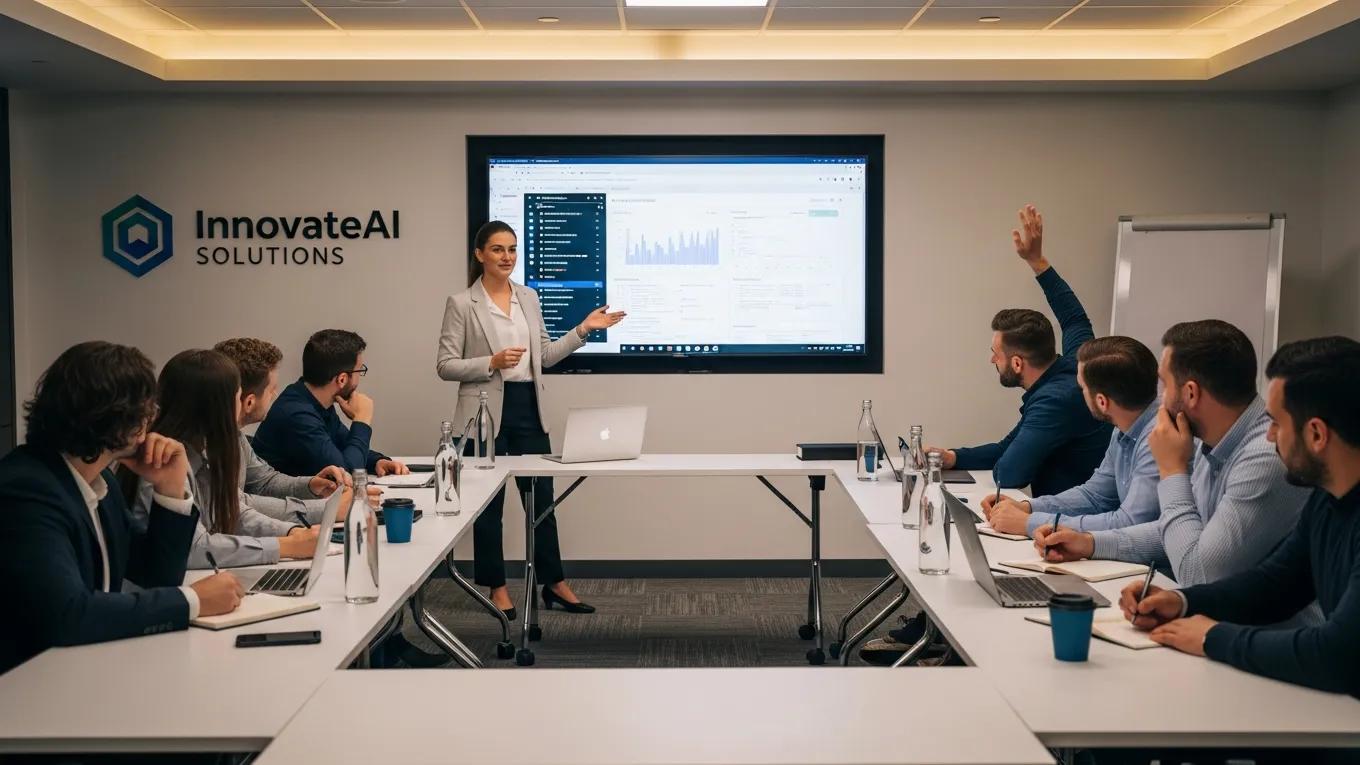
Enterprises are addressing reskilling and redeployment through targeted upskilling programs and formal partnerships with academic and training providers. Investments commonly include workshops on data analysis, applied AI tools, and role-specific competencies, enabling employees to transition into positions that complement AI capabilities rather than compete with them.
What Are the Core Principles of Enterprise AI Governance?
AI governance frameworks establish guardrails for ethical and compliant deployment. Core principles include transparency of model behavior, accountability for outcomes, and fairness in decision-making. These principles inform policy design, process controls, and oversight mechanisms to reduce operational and reputational risk.
How Does AI Governance Mitigate Organizational Risks?
Governance mitigates risk by codifying permissible uses of AI, defining decision-making authorities, and instituting review processes for model deployment. Through formal frameworks, organizations can ensure compliance with regulatory obligations, maintain auditability of decisions, and limit exposure to adverse consequences from erroneous or biased systems.
What Frameworks Guide Ethical and Compliant AI Deployment?

Widely referenced frameworks include the OECD Principles on Artificial Intelligence and the EU Ethics Guidelines for Trustworthy AI. These instruments prioritize human oversight, data protection, transparency, and explainability. Alignment with such frameworks supports responsible deployment and facilitates regulatory compliance.
Which AI Risk Management Strategies Ensure Sustainable Workforce Outcomes?
Effective AI risk management requires proactive identification of hazards and structured mitigation plans to preserve workforce sustainability. Strategies should integrate risk assessment, governance controls, and reskilling pathways to maintain operational continuity and employee well-being.
How Can Enterprises Identify and Address AI-Related Operational Risks?
Enterprises identify operational risks through comprehensive assessments that map AI impacts on existing workflows and systems. Risk mitigation measures typically include strengthening data security, enforcing model validation practices, and ensuring adherence to applicable regulatory requirements.
What Best Practices Support Human-AI Collaboration and Risk Mitigation?
Best practices for human-AI collaboration encompass establishing cross-functional governance teams, delivering role-specific AI training, and maintaining transparent communication channels regarding system capabilities and limitations. These measures improve integration outcomes and reduce risks associated with displacement and process failures.
What Future Skills Will Define the AI-Driven Workforce?
Certain competencies will increase in strategic value as AI adoption expands. Proficiency in working with AI systems, interpreting analytical outputs, and applying domain expertise to machine-generated recommendations will distinguish high-performing professionals.
Which Competencies Are Essential for Navigating AI-Enhanced Roles?
Essential competencies include critical thinking, adaptability, and technical proficiency with AI tools and data analysis. Employees must interpret AI-derived insights, make evidence-based decisions, and maintain effective collaboration skills to operate in hybrid human–AI teams.
How Are Training Programs Evolving to Meet AI Era Demands?
Training programs are shifting toward experiential, interdisciplinary curricula that combine hands-on work with AI technologies and domain-specific instruction. Organizations commonly partner with educational institutions to create targeted curricula that close identified skills gaps.
How Can Enterprises Leverage AI to Optimize Organizational Performance?
Enterprises optimize performance by deploying AI to support data-driven decision-making and operational efficiency gains. AI systems can process large datasets to surface insights that inform strategic planning, resource allocation, and continuous improvement initiatives.
What Case Studies Demonstrate Successful AI-Enabled Workforce Strategies?
Several documented cases demonstrate tangible benefits from AI-enabled workforce strategies. For example, a leading retail firm implemented AI-driven inventory management, achieving measurable cost reductions and improvements in customer satisfaction metrics. Such implementations illustrate AI’s capacity to enhance competitive positioning when combined with appropriate workforce change management.
How Does Strategic AI Adoption Impact Enterprise Risk and Productivity?
Strategic AI adoption reduces certain operational risks and increases productivity by automating routine processes and improving decision quality. Organizations that align AI investments with governance and skills development can realize sustainable productivity gains while managing associated risks.
Dr. George Dagliyan is presented as an expert in AI governance, enterprise systems innovation, and risk management, specializing in forecasting AI’s effects on workforce roles and organizational performance. His website provides consulting, advisory, and speaking services aligned with these topics.
Frequently Asked Questions
What are the potential job roles that may emerge due to AI integration?
Emergent roles include AI trainers responsible for model supervision and data curation, AI ethicists who define governance and compliance standards, and specialists in data analysis and system maintenance. These positions require domain knowledge, technical literacy, and the ability to translate model outputs into operational actions.
How can organizations ensure a smooth transition for employees affected by AI?
Organizations should implement structured change management programs that combine transparent communication, targeted reskilling initiatives, and stakeholder engagement. Complementary measures such as mentorship, career counseling, and phased redeployment plans reduce disruption and support workforce mobility.
What role does leadership play in AI workforce transformation?
Leadership establishes strategic direction for AI adoption, allocates resources for skills development, and enforces governance standards. Executive engagement is critical to embed a culture of continuous learning, uphold ethical deployment, and coordinate cross-functional implementation efforts.
How can small businesses leverage AI without significant investment?
Small businesses can adopt cost-effective, cloud-based AI services that provide scalable functionality with low upfront costs. Targeted automation of specific processes—such as customer support chatbots or basic analytics—can deliver efficiency gains. Partnerships with startups or freelance specialists may provide additional expertise without long-term hiring commitments.
What are the ethical considerations organizations should keep in mind when implementing AI?
Key ethical considerations include safeguarding data privacy, mitigating algorithmic bias, and assessing workforce impacts. Organizations should prioritize system transparency and explainability, conduct regular audits, and engage diverse stakeholders during development to promote fairness and accountability.
How can organizations measure the success of their AI initiatives?
Success should be measured against aligned KPIs, including operational efficiency improvements, cost savings, and customer satisfaction indices. Workforce metrics—such as employee engagement and skill development—should also be tracked. Regular performance reviews and feedback loops enable iterative refinement of AI strategies.
Conclusion
Adoption of AI in the workplace can deliver measurable efficiency gains, improved decision support, and the emergence of new roles that require advanced competencies. Understanding these implications enables organizations to navigate workforce transitions with ethical and operational rigor. To maintain competitiveness, organizations should invest in targeted training programs that develop requisite competencies for an AI-driven environment. Explore our resources to obtain additional guidance on optimizing workforce readiness for AI-related challenges and opportunities.