


Comprehensive Insurance Operations Strategy, Data Management, and Systems Optimization for Enterprise Risk and AI Integration
A robust operations strategy is a requirement for managing complexity and improving performance in the insurance sector. This article examines insurance operations strategy with a focus on data management and systems optimization, specifically in the context of enterprise risk and artificial intelligence (AI) integration. It identifies the components of an effective strategy, the operational effects of digital transformation, and the capabilities by which AI can improve data management and claims automation. The analysis addresses enterprise risk management, insurance data architecture design, and the emerging trends that influence operational direction.
What Constitutes an Effective Insurance Operations Strategy in the Property Casualty Sector?
An effective insurance operations strategy consists of a coordinated framework that aligns people, processes, and technology to improve enterprise performance. The strategy enables organizations to meet market requirements while controlling risk exposure. Core elements include predictive analytics, AI-driven solutions, and interoperable system integration; together these elements enhance decision support and operational efficiency. Applied correctly, these capabilities allow insurers to optimize workflows and improve client outcomes.
Key Components of Insurance Operations Strategy and Their Impact on Enterprise Performance
Predictive analytics enhances decision-making by enabling insurers to identify trends and adjust tactical and strategic plans. AI-driven solutions automate routine workflows, reduce operating costs, and improve policyholder engagement metrics. Organizations that adopt these technologies report measurable improvements in operational efficiency, profitability, and customer satisfaction. The combined implementation of these components increases organizational resilience to future market and regulatory changes.
How Does Digital Transformation Influence Insurance Operations Strategy?
Digital transformation reshapes operations through adoption of advanced technologies that increase customer engagement and streamline processes. Cloud-based platforms provide real-time data access and enable cross-functional collaboration. This shift supports scalable operations and the delivery of more tailored services to policyholders. As digital capabilities advance, insurers should align transformation initiatives with strategic objectives to realize operational benefits.
How Does AI Integration Enhance Insurance Data Management and Claims Automation?
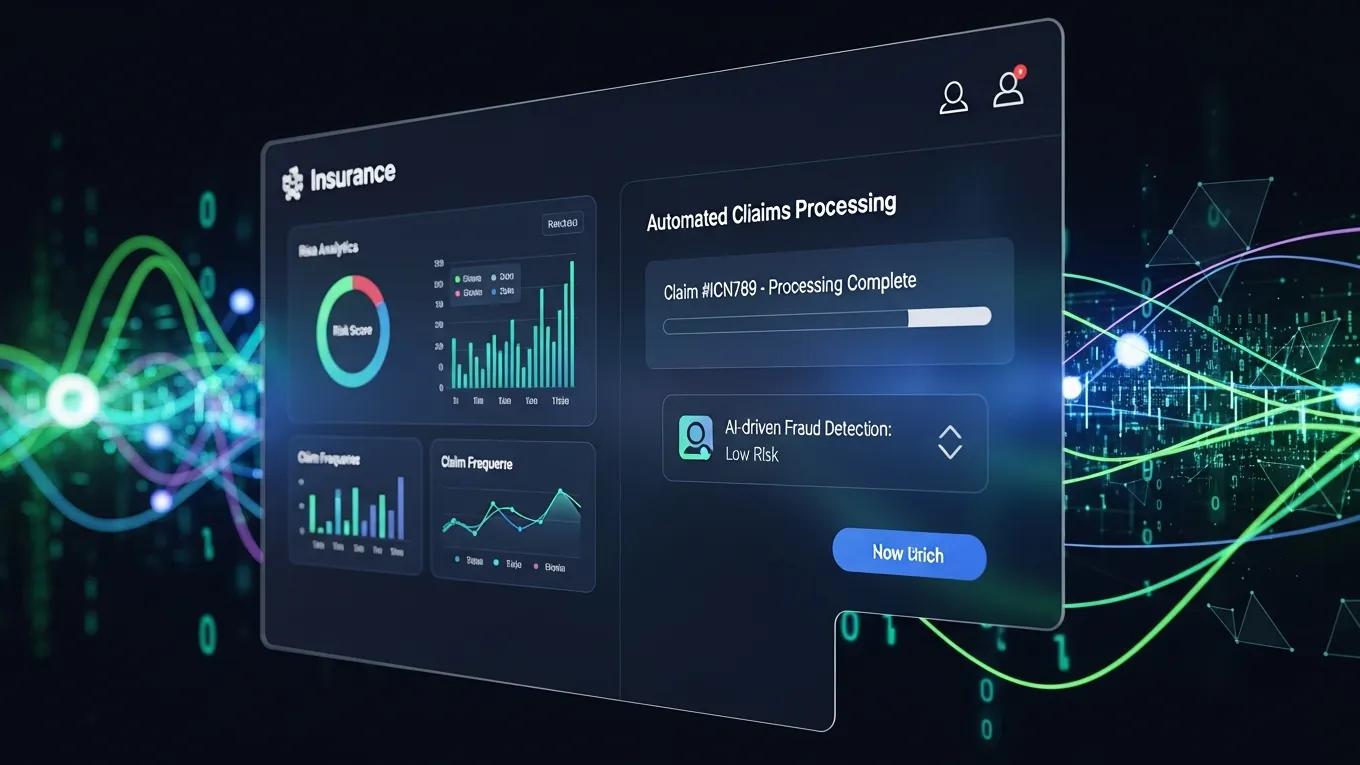
AI integration improves data management and claims automation by enhancing accuracy and processing capacity. Machine learning models enable analysis of large datasets to identify patterns and support evidence-based decisions. In claims operations, AI can automate routine tasks, shorten cycle times, and reduce manual processing effort. Consequently, resources can be reallocated to complex adjudications, improving overall service delivery.
AI Governance Frameworks for Optimizing Insurance Data Systems
Effective AI governance frameworks are necessary to optimize insurance data systems and to ensure compliance with regulatory and industry standards. Governance should define controls for data handling, model transparency, validation, and auditability. These measures mitigate risks associated with AI deployment and support operational integrity. Clear governance also enhances stakeholder confidence in the management of sensitive information.
The integration of AI with cloud-native architectures, together with comprehensive AI governance, is central to modernizing insurance operations and maintaining regulatory compliance.
AI Governance & Cloud for Insurance Transformation
Artificial Intelligence (AI) and cloud-native architectures are increasingly critical to insurance industry transformation, enabling modernization of legacy systems, accelerated claims processing, and enhanced regulatory compliance. This paper examines AI governance within regulated cloud-native insurance platforms and outlines how governance frameworks can promote fairness, transparency, accountability, and privacy in AI-based decision-making.
AI Governance in Regulated Cloud-Native Insurance Platforms, GR Enjam, 2023
Best Practices for Implementing Claims Automation in Property Casualty Insurance
Implementing claims automation successfully requires adherence to defined best practices.
- Define Clear Objectives: Establish specific goals for automation, such as reducing processing times or improving accuracy.
- Invest in Technology: Utilize advanced AI tools that can handle complex data analysis and automate routine tasks.
- Train Staff: Ensure that employees are equipped with the necessary skills to work alongside automated systems effectively.
Adherence to these practices enables organizations to streamline claims workflows and improve policyholder satisfaction.
AI-driven triage systems categorize and prioritize claims by complexity, enabling expedited handling of routine cases within the P&C sector.
AI for P&C Insurance Claims Automation
Automation of claims management via AI and triage systems categorizes incoming claims by complexity and priority, permitting insurers to accelerate processing of simple claims.
Impact of technology on the property and casualty (P&C) insurance industry, 2024
What Are the Critical Elements of Enterprise Risk Management in Insurance Operations?

Enterprise risk management (ERM) is central to insurance operations and focuses on identification, assessment, and mitigation of risks that affect organizational performance. Robust ERM frameworks enable insurers to manage uncertainty and align risk responses with strategic objectives. Key ERM elements include quantitative risk analytics and AI-supported mitigation strategies that enhance the organization’s capacity to respond to emerging exposures.
Risk Analytics and AI-Driven Risk Mitigation Strategies
Risk analytics employs quantitative techniques to identify and evaluate exposures. Leveraging AI-supported tools increases predictive accuracy and enables more timely interventions. This proactive orientation reduces potential losses and informs strategic decisions, strengthening organizational resilience.
Research indicates that integrating advanced data analytics and AI can materially strengthen ERM frameworks, enabling more proactive risk management and higher-quality decision-making.
AI & Data Analytics for Insurance Enterprise Risk Management
Enterprise risk management (ERM) frameworks can be strengthened by integrating advanced data analytics, artificial intelligence (AI), and machine learning (ML) techniques. This integration enables more proactive identification, assessment, and mitigation of operational risks and fraud in the insurance sector. The paper demonstrates how integrating ERM software with AI-powered predictive models can enhance decision-making and improve overall risk posture.
Enhancing Enterprise Risk Management in Insurance: Addressing Operational Risk and Fraud through Data Analytics and AI, 2025
Aligning Risk Management with Insurance Data Architecture and Systems
Alignment between risk management and data architecture is essential for effective ERM. A well-structured data architecture embeds risk controls into operational workflows and supports rapid response to emerging threats. Ensuring seamless data flows across systems improves risk assessment capabilities and overall operational efficiency.
How Should Insurance Data Architecture Be Designed for Optimal System Integration?
Insurance data architecture should be designed to support scalability, security, and accessibility. A resilient architecture enables management of high data volumes while enforcing access controls and preventing unauthorized access. Prioritizing these design principles ensures effective support for AI initiatives and ERM processes.
Frameworks for Scalable and Secure Insurance Data Management
Scalable and secure data management frameworks are foundational to operational optimization. Such frameworks should incorporate best practices for data storage, role-based access control, and encryption to protect sensitive information. A proactive approach to data governance positions organizations to address regulatory and technological change.
Integrating Enterprise Systems to Support AI and Risk Management Initiatives
Enterprise system integration creates a unified ecosystem for secure data sharing and cross-functional collaboration, improving operational efficiency and decision quality. Integrated systems enable effective deployment of AI and risk management capabilities, supporting innovation and controlled growth.
What Are Emerging Trends and Future Directions in Insurance Operations Strategy and AI Governance?
Emerging trends that affect operations strategy and AI governance include accelerated AI adoption, increased emphasis on data privacy, and evolving regulatory requirements. Insurers should monitor these trends to ensure operational practices remain compliant and competitively positioned.
Projected AI Adoption Rates and Their Impact on Property Casualty Insurance
Forecasts for AI adoption indicate broad integration of AI across insurance functions. Expected effects include higher operational efficiency, lower processing costs, and improved customer experience metrics. Insurers must adapt strategy and governance to capture these benefits while managing attendant risks.
Innovations in AI Governance and Regulatory Compliance for Insurance Enterprises
Innovations in AI governance are required to reconcile compliance obligations with the operational advantages of AI. Organizations should develop governance frameworks that address regulatory requirements and ethical considerations. Emphasizing governance fosters transparency and accountability and supports stakeholder trust.
Frequently Asked Questions
What role does customer feedback play in shaping insurance operations strategy?
Customer feedback provides empirical insight into client requirements and service performance. Systematic collection and analysis of feedback identify operational and product improvements. Incorporating these insights into strategy enhances satisfaction, retention, and market responsiveness, thereby supporting improved business outcomes.
How can small insurance companies leverage AI without significant investment?
Small insurers can access AI capabilities through cloud-based, consumption-priced services that minimize capital expenditure. Vendor-managed solutions and select open-source tools permit targeted deployments for functions such as claims processing or customer service. Focused implementations can deliver efficiency gains without substantial upfront investment.
What are the potential risks associated with AI integration in insurance?
AI integration entails risks including data privacy exposures, algorithmic bias, and regulatory non-compliance. Insurers should implement transparent models, validation procedures, and governance controls to mitigate these risks. Proactive oversight and compliance monitoring preserve operational value while reducing potential harm.
How does regulatory compliance impact the implementation of AI in insurance?
Regulatory compliance shapes AI implementation by defining permissible practices for data collection, processing, and algorithmic decision-making. Compliance obligations influence system design requirements for transparency, fairness, and auditability. Prioritizing compliance reduces legal risk and supports customer and regulator confidence.
What skills are essential for employees to adapt to AI-driven insurance operations?
Required skills include quantitative data analysis, familiarity with AI platforms, and basic machine learning literacy. Complementary competencies—critical thinking, problem-solving, and adaptability—are necessary for effective integration of AI into workflows. Continuous professional development programs enable workforce readiness for AI-augmented operations.
How can insurers measure the success of their AI initiatives?
Insurers should measure AI initiatives using KPIs aligned to strategic objectives, such as operational efficiency, cost-to-serve, customer satisfaction indices, and claims cycle times. Establishing baselines prior to deployment and conducting regular performance reviews enables quantification of impact and iterative optimization of models and processes.
Conclusion
Implementing a comprehensive insurance operations strategy that integrates data management and AI is necessary to improve efficiency and mitigate risk. Advanced technologies enable streamlined processes, enhanced customer engagement, and sustained competitive advantage. A clear understanding of these components supports informed decision-making that drives growth and innovation. Learn how our solutions support optimization of insurance operations.