


Predictive Analytics for Enterprise Decision Support: Enhancing Risk Forecasting and AI Governance
Predictive analytics has become a strategic capability for enterprises, enabling evidence-based decisions that increase operational efficiency and strengthen risk management. This article examines the mechanisms, benefits, and enterprise applications of predictive analytics, with specific emphasis on risk forecasting and AI governance. As organizational environments grow more complex, the capacity to anticipate risks and make informed decisions is essential. The following sections define core concepts, evaluate forecasting models, and present practical use cases that support digital transformation. Implementation and monitoring practices are also addressed to ensure sustained competitive performance.
What is Predictive Analytics in Enterprise Decision Support?
Predictive analytics employs statistical algorithms and machine learning to estimate the probability of future events using historical and current data. This methodology supports decision making by forecasting potential risks and opportunities. When combined with data visualization and advanced analytics, predictive models improve operational efficiency and inform strategic planning. Embedding predictive analytics within enterprise decision support systems enables a proactive risk-management posture and institutionalizes data-driven decision processes.
Dr. George Dagliyan is an expert in artificial intelligence governance, enterprise systems innovation, and risk management, with a specialization in predictive analytics for enterprise decision support. His consulting and advisory services assist organizations in managing digital transformation and in realizing the operational benefits of predictive analytics.
Key Concepts: Enterprise Risk Forecasting and Predictive Decision Support Systems
Enterprise risk forecasting consists of the systematic identification and assessment of risks that may affect organizational objectives. Predictive decision support systems apply data analytics to generate insights that inform risk-management strategies. These systems use historical and contextual data to model plausible future scenarios, enabling organizations to anticipate disruptions and respond proactively. Data-driven decision making permits more effective resource allocation and early mitigation of emergent risks.
Further research highlights the application of predictive analytics to credit risk forecasting using real-time data.
Predictive Analytics for Enterprise Credit Risk Forecasting
Traditional economic and business forecasting of corporate credit has relied on statistics from government agencies, annual reports, and financial statements. Those sources are frequently published with a delay, which limits their utility for predicting near-term changes in creditworthiness. Delayed responses to changes in a firm’s credit rating can generate material financial and risk consequences. With widespread adoption of search engines, social media, and related information technologies, near-instant data on large volumes of economic activity is obtainable. This study examined the predictive value of online activity data combined with information on firms’ business ecosystems to estimate the likelihood of counterparty credit downgrades.
Using predictive analytics to reduce uncertainty in enterprise risk management, H Ghasemkhani, 2015
How Do AI Governance Frameworks Improve Enterprise Risk Management?

AI governance frameworks establish policies, controls, and oversight mechanisms for the development and deployment of AI systems. These frameworks promote transparency, accountability, and alignment with corporate policies. Proper governance reduces exposure to bias, data-privacy lapses, and regulatory noncompliance. Implementing structured governance supports stakeholder confidence and enhances the reliability of AI-informed decisions within enterprise risk-management processes.
Which Forecasting Models Are Most Effective for Enterprise Risk Analysis?
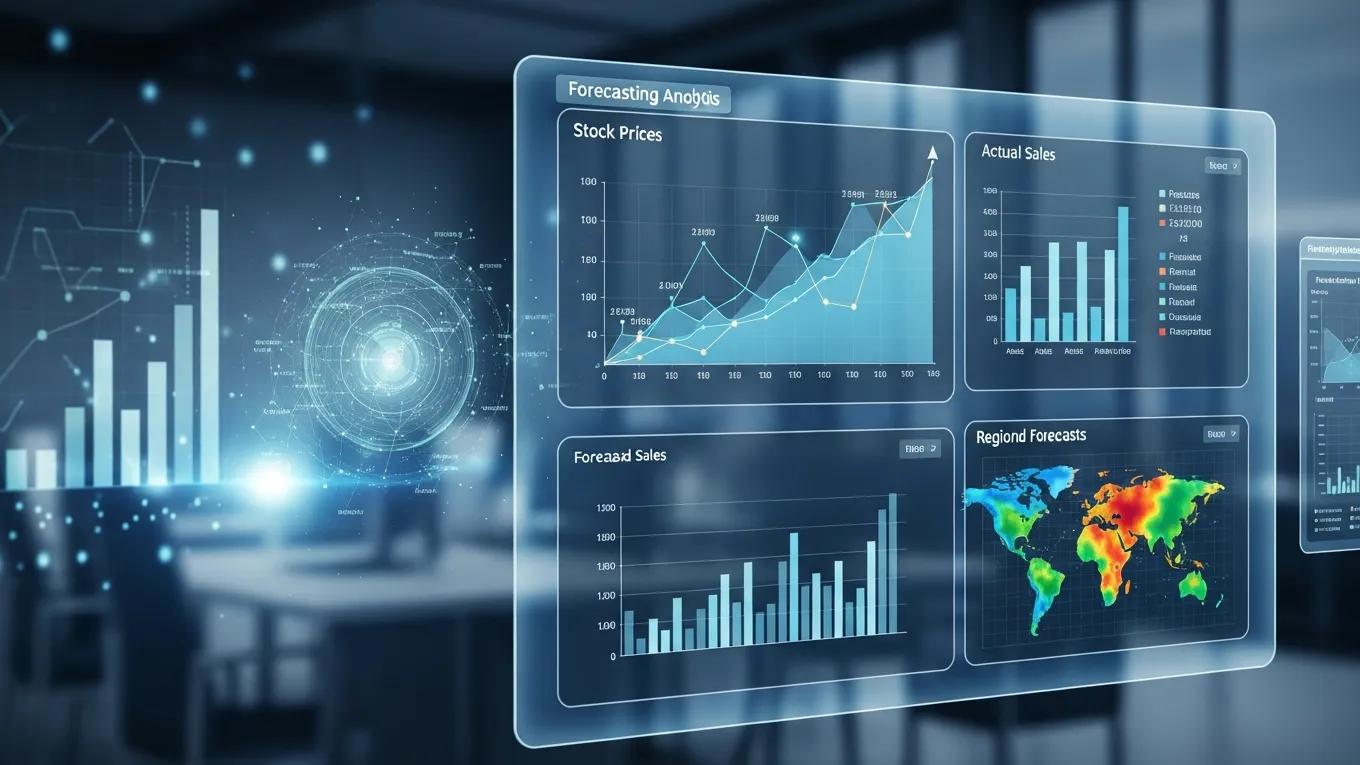
Enterprises employ multiple forecasting approaches, each with defined strengths and limitations. Time series models analyze historical observations to project trends, while machine learning methods detect non-linear and multivariate patterns that traditional models may miss. Comparative evaluations indicate that hybrid solutions, which integrate statistical techniques with machine learning algorithms, frequently improve accuracy and robustness across varied datasets.
What Are the Practical Applications of Predictive Analytics in Enterprise Decision Support?
Predictive analytics supports operational and strategic decisions across functions by converting data into actionable forecasts and recommendations. Notable use cases include financial planning, supply chain demand forecasting, and customer-behavior analysis, each producing measurable operational and strategic benefits.
- Financial Forecasting: Organizations can predict revenue trends and manage cash flow more effectively.
- Supply Chain Optimization: Predictive analytics helps in anticipating demand fluctuations, allowing for better inventory management.
- Customer Insights: Businesses can analyze customer behavior to tailor marketing strategies and improve customer satisfaction.
These examples illustrate the applicability of predictive analytics across business functions and its contribution to strategic initiatives.
How Can Enterprises Implement and Monitor Predictive Analytics Solutions?
Deploying predictive analytics requires a structured program that addresses objectives, data, models, and governance. A staged approach reduces implementation risk and facilitates measurable value capture.
- Define Objectives: Clearly outline the goals of the predictive analytics initiative, ensuring alignment with organizational objectives.
- Data Collection: Gather relevant data from various sources, ensuring its quality and accuracy.
- Model Selection: Choose appropriate forecasting models based on the specific needs of the organization.
- Monitoring and Evaluation: Establish key performance indicators (KPIs) to assess the effectiveness of the predictive analytics solutions.
Dr. George Dagliyan provides consulting and advisory services to assist organizations in operationalizing these steps and in maximizing the benefits of predictive analytics deployments.
What Are the Emerging Trends and Future Directions in Predictive Analytics for Enterprises?
Predictive analytics continues to evolve driven by advances in artificial intelligence and machine learning that expand modeling capability and automation. Concurrent trends include heightened attention to data privacy, interpretability, and ethical governance, which inform framework development and compliance practices. As adoption increases, emphasis will shift toward adaptive models that maintain performance amid changing market conditions and customer behavior.
In summary, predictive analytics materially enhances enterprise decision support by improving risk forecasting and informing AI governance. Understanding applicable use cases and implementing disciplined strategies enable organizations to manage complexity and capture measurable value.
Frequently Asked Questions
What types of data are essential for effective predictive analytics?
Effective predictive analytics depends on high-quality, relevant data from multiple sources. Core data types include historical performance metrics, real-time operational feeds, customer interaction records, and external market indicators. Combining structured datasets (for example, sales figures) with unstructured sources (such as social-media signals) can improve model predictive power. Maintaining data quality, consistency, and provenance is critical to avoid misleading outcomes.
How can predictive analytics improve customer relationship management?
Predictive analytics enhances CRM by modeling customer behavior and preferences to inform targeted interventions. Analysis of transaction histories and interaction logs enables anticipation of customer needs, segmentation for tailored marketing, and identification of attrition risk. These insights support retention strategies and service optimization, which can increase customer lifetime value and satisfaction.
What challenges do organizations face when implementing predictive analytics?
Common implementation challenges include fragmented data architectures, shortages of skilled analytics personnel, and organizational resistance to process change. Data silos impede comprehensive modeling, while limited in-house expertise constrains model development and governance. Overcoming these barriers requires coordinated planning, investment in talent and training, and leadership that prioritizes evidence-based decision processes.
How does predictive analytics contribute to risk management?
Predictive analytics contributes to risk management by enabling early detection of patterns indicative of operational, market, or credit risk. By analyzing historical and near-real-time data, organizations can quantify risk exposures, forecast potential loss events, and execute mitigations such as strategic adjustments or resource reallocation. This anticipatory capability supports more resilient operational planning and asset protection.
What role does machine learning play in predictive analytics?
Machine learning enhances predictive analytics by automating pattern discovery and improving model generalization across high-dimensional data. ML algorithms learn from historical observations to generate forecasts without explicit rule-based programming and can adapt as new data arrive. Continuous model validation and governance are necessary to preserve accuracy and control model drift.
Can predictive analytics be applied in real-time decision-making?
Predictive analytics can operate in real time when supported by streaming data and low-latency inference infrastructure. Sectors such as finance, retail, and healthcare use real-time analytics for fraud detection, dynamic inventory adjustments, and clinical decision support. Real-time application increases organizational responsiveness and enables immediate mitigation or opportunity capture based on current signals.
Conclusion
Predictive analytics enables enterprises to improve decision quality through enhanced risk forecasting and formalized AI governance. Data-driven insights support proactive risk management and operational optimization across multiple use cases. Implementing disciplined predictive-analytics strategies is essential for addressing contemporary business complexity. Our consulting services are available to assist organizations in deploying and scaling predictive analytics to realize measurable outcomes.