


Connect with Dr. George Dagliyan for AI Governance & ERM Training
Robust AI governance frameworks and enterprise risk management (ERM) training are foundational to effective digital transformation. Organizations require structured processes to manage technical, regulatory, and operational complexities introduced by AI. This article outlines the principal components of AI governance and explains how targeted ERM training supports successful transformation. It reviews mechanisms for addressing risk and compliance, summarizes ERM best practices, and describes the value of executive workshops for corporate strategy. Understanding these elements enables organizations to mitigate adoption risks and improve decision-making.
What Are the Core Components of AI Governance Frameworks in Enterprise Settings?
AI governance frameworks enable organizations to manage AI-related risk across multiple domains. Core components typically include institutional governance and trust, formal risk management processes, regulatory compliance, operational resilience, and stakeholder engagement. Each component contributes to responsible, auditable, and ethical deployment of AI systems.
How Do AI Governance Frameworks Address Risk and Compliance?
AI governance establishes formal policies and procedures to manage risk and regulatory obligations. Risk assessment methodologies identify system vulnerabilities and quantify exposure. Compliance processes ensure alignment with applicable laws and standards. This structured, preventative approach reduces operational and legal risk while supporting stakeholder confidence.
Recent research further documents the intersection of AI innovation and organizational oversight, underscoring material effects on corporate governance and risk management.
AI’s Impact on Corporate Governance & Risk Management
The introduction of artificial intelligence (AI) constitutes a substantive shift in corporate governance, prompting reassessment of traditional frameworks and a need for forward-looking decision-making, risk management, and ethical oversight. This study analyzes how AI technologies affect operational, strategic, and ethical dimensions of organizations, and identifies benefits such as improved decision-support, operational efficiency gains, and enhanced analytical and predictive capabilities. The research also identifies emergent challenges, including data privacy risks, algorithmic bias, and the requirement for strengthened regulatory and governance mechanisms to mitigate deployment risks.
The impact of artificial intelligence on corporate governance, G Kalkan, 2024
Which Industry Standards Inform Effective AI Governance?
Industry standards inform the design and implementation of AI governance. Guidance from ISO, NIST, and IEEE provides principles for ethical AI, data protection controls, and accountability mechanisms. Adopting these standards supports regulatory alignment and reinforces governance consistency across programs.
How Does Enterprise Risk Management Training Enhance Digital Transformation Success?
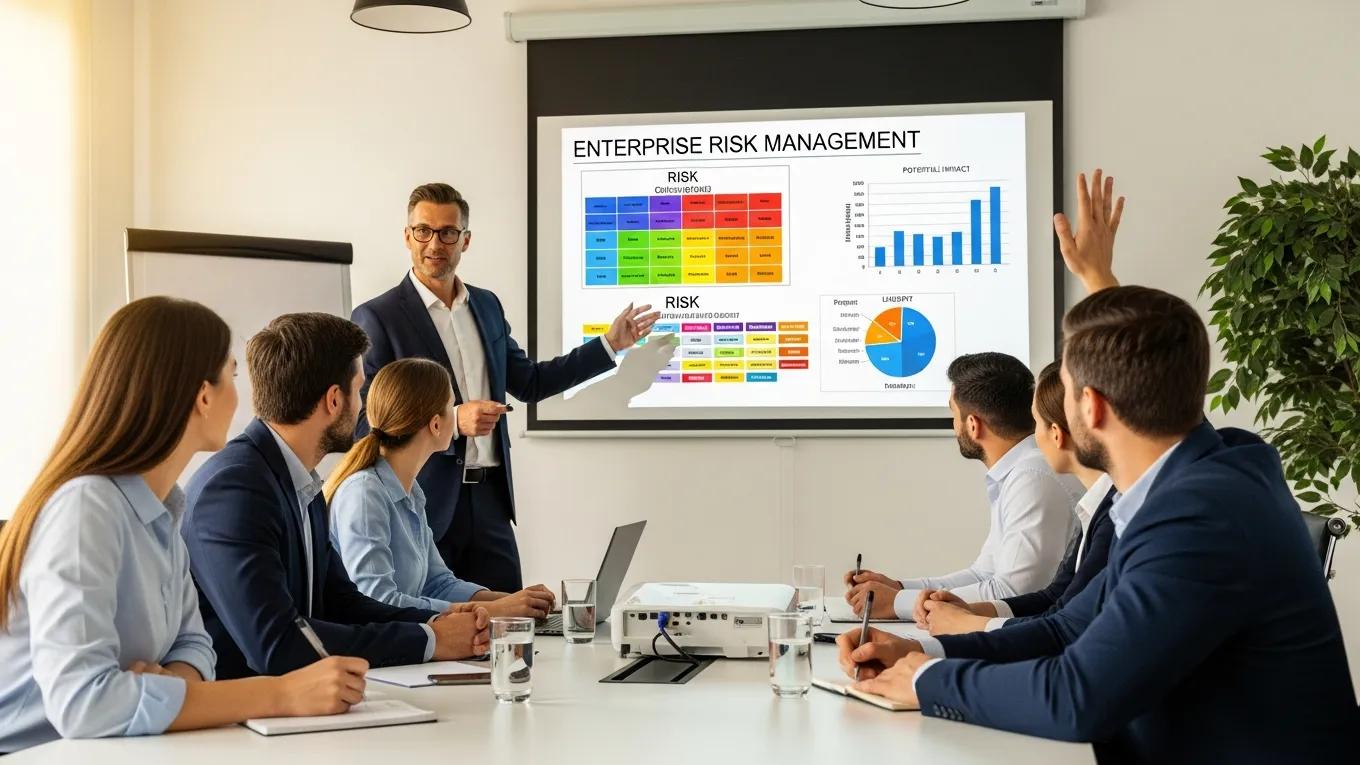
Enterprise risk management training develops organizational capability to manage risks arising from digital transformation. Training emphasizes risk identification, assessment methodologies, and governance processes that enable continuous monitoring and reporting. A sustained focus on risk awareness improves preparedness for technology-related uncertainties.
What Best Practices Define Enterprise Risk Management in Digital Contexts?
Practices central to digital ERM include systematic risk identification, development of risk matrices, and establishment of clear governance structures. These measures enable prioritization and coordinated response to emerging threats, thereby improving organizational resilience and operational agility.
How Do ERM Strategies Mitigate Risks Associated with AI Adoption?
ERM strategies mitigate AI adoption risks through targeted privacy risk management and operational risk mitigation. These approaches focus on protecting data security and ensuring AI systems operate as intended to reduce service disruptions and adverse outcomes.
What Are the Benefits of Executive AI Workshops for Corporate Strategy Development?

Executive AI workshops support corporate strategy by improving leaders’ understanding of AI adoption dynamics, heightening risk awareness, and informing the design of governance frameworks aligned to organizational requirements. Participation enables strategic alignment with technological developments.
How Do Executive Workshops Facilitate AI Governance and Risk Awareness?
Executive workshops operationalize AI governance through structured risk assessments and the development of governance policies. Sessions promote collaborative decision-making among leaders and facilitate assessment of AI implications, enabling development of governance frameworks tailored to organizational challenges.
Which Skills and Competencies Are Developed Through AI Governance Training?
AI governance training develops competencies in AI adoption dynamics, enterprise risk management methodologies, and strategic leadership for technology oversight. These capabilities are necessary for effective governance and for integrating AI into operational and strategic processes.
Empirical studies support structured frameworks for executive AI skills development and training.
AI Skills Training Framework for Executives
This study documents current strategies and policies for developing AI skills among public-sector executives and proposes a holistic training framework based on European and international standards. The paper systematically reviews the literature on AI training policy with emphasis on executive-level capacity building.
Policy strategies for training public sector executives to develop artificial intelligence skills, M Niari, 2024
How Can Organizations Integrate Corporate AI Strategy Training into Existing Governance Models?
Integrating AI strategy training into existing governance models ensures a coordinated approach to AI adoption. This requires aligning curricula with established governance processes and leveraging organizational expertise and resources to create an integrated training plan.
What Frameworks Support Seamless AI Strategy Integration?
Frameworks that support integration provide guidance for aligning AI initiatives with organizational objectives and stakeholder responsibilities. Applying these frameworks promotes consistent governance practices and facilitates transition to AI-enabled operations.
How Does AI Ethics and Compliance Influence Corporate Governance?
AI ethics and compliance materially influence corporate governance by requiring organizations to embed ethical safeguards and compliance controls into development and deployment processes. Incorporating ethical criteria into governance frameworks strengthens accountability and supports stakeholder confidence.
The application of AI techniques such as natural language processing and machine learning can materially enhance governance and compliance capabilities.
AI for Corporate Governance & Compliance
This research examines the application of natural language processing (NLP) and machine learning (ML) to corporate governance and compliance. Given increasing regulatory complexity, the study evaluates AI-driven approaches to streamline governance workflows, support regulatory interpretation, detect compliance anomalies, and inform decision-making. Using a mixed-methods design—literature review, case studies, and experimental evaluation—the authors report that integrating NLP and ML improves the efficiency and accuracy of compliance checks
Enhancing corporate governance and compliance through AI: Implementing natural language processing and machine learning algorithms, 2022
What Are the Key Risks in Digital Transformation and How Does Risk Management Training Address Them?
Digital transformation introduces risks that must be addressed to secure implementation outcomes. Key risks include uncertainty in AI system performance, data privacy exposures, and loss of operational control over automated processes. Risk management training provides the methods and governance structures required to address these issues.
Which Digital Transformation Risks Are Most Critical for Enterprises?
Critical digital transformation risks consist of data privacy breaches, operational disruptions from system failures, and biased outcomes produced by AI models. Identifying these risks enables targeted mitigation to protect operations and stakeholder trust.
How Do Risk Heat Maps and Frameworks Enhance Risk Visibility?
Risk heat maps and associated frameworks increase visibility by mapping threat likelihood against impact on objectives. These visual tools support prioritization and resource allocation, enabling timely response to emergent risks and enhancing overall risk governance.
How Do AI Governance and ERM Workshops Support Executive Decision-Making and Organizational Performance?
AI governance and ERM workshops strengthen executive decision-making by delivering actionable frameworks and operational tools for AI oversight and risk management. The structured learning environment supports cross-functional alignment and continuous improvement, contributing to measurable performance gains.
What Case Studies Demonstrate Workshop Impact on Enterprise Systems Innovation?
Multiple case studies document that AI governance and ERM workshops can lead to improved governance adoption, operational efficiency, and more informed decision-making. These examples illustrate practical implementation paths and measurable outcomes from governance and risk interventions.
How Are Workshop Outcomes Measured and Monitored for Continuous Improvement?
Workshop outcomes are measured through metrics such as participant evaluations, retention assessments, and monitoring of applied practices. Tracking implementation of recommended strategies provides evidence for program refinement and supports continuous improvement of governance and risk capabilities.
Frequently Asked Questions
What is the role of AI ethics in governance frameworks?
AI ethics constitutes a central element of governance frameworks by defining principles and controls to ensure fair, transparent, and accountable AI deployment. Frameworks address bias mitigation, model explainability, and responsibility assignment. Embedding ethical standards reduces reputational and regulatory risk and supports stakeholder trust.
How can organizations assess the effectiveness of their AI governance frameworks?
Effectiveness is assessed via periodic audits and performance evaluations using key performance indicators, including compliance rates, incident frequency, remediation times, and stakeholder feedback. Benchmarking against industry standards and best practices further identifies gaps and improvement opportunities.
What challenges do organizations face when implementing AI governance frameworks?
Common implementation challenges include organizational resistance to change, limited AI literacy, resource constraints, and difficulty aligning new governance with existing structures. Rapidly evolving regulations compound these issues. Addressing them requires leadership commitment, targeted training, and cross-functional coordination.
How does risk management training differ from traditional training programs?
Risk management training differs by concentrating on risk identification, assessment, and mitigation related to organizational processes, especially within digital transformation contexts. It emphasizes scenario-based exercises, practical application of frameworks, and development of decision-making skills for uncertainty management.
What are the long-term benefits of investing in AI governance and ERM training?
Long-term benefits of AI governance and ERM training include increased organizational resilience, improved strategic decision-making, and strengthened stakeholder confidence. Enhanced governance capabilities facilitate regulatory compliance and ethical practice, supporting sustainable growth and competitive positioning.
How can organizations ensure continuous improvement in their AI governance practices?
Continuous improvement requires establishing feedback loops that integrate stakeholder input, regular audits, and performance metrics. Ongoing professional development and adaptive governance processes ensure frameworks remain current with regulatory and technological changes.
Conclusion
Implementing comprehensive AI governance frameworks and enterprise risk management training is essential for organizations navigating digital transformation. These initiatives improve decision-making, strengthen risk mitigation, and foster a culture of accountability and ethical conduct. By investing in executive workshops, organizations equip leaders with the competencies required to manage evolving AI technologies. Explore our training programs today to position your organization for future success.