


Consulting Services for Enterprise Delivery and Governance
Effective delivery playbooks, service level agreements (SLAs), and governance frameworks are foundational elements for optimizing enterprise system performance and maintaining regulatory compliance. This article analyzes the core components of these instruments, describes their interdependencies for improving service delivery and reducing operational risk, and summarizes the roles of AI governance and advisory services in enabling these capabilities during digital transformation.
What Are the Essential Components of Delivery Playbooks in Enterprise Systems?
Delivery playbooks codify standardized procedures, operational controls, and service expectations that support repeatable and auditable service delivery across the enterprise.
- Service Definitions : Clear descriptions of the services offered, including scope and objectives.
- Roles and Responsibilities : Defined roles for team members involved in service delivery, ensuring accountability.
- Process Workflows : Step-by-step procedures that outline how services are delivered, including timelines and milestones.
- Performance Metrics : Criteria for measuring the success of service delivery, often linked to SLAs.
A structured understanding of these elements enables organizations to streamline operations, reduce variance, and improve measurable service quality.
How Do Delivery Playbooks Define Service Level Agreements and Metrics?
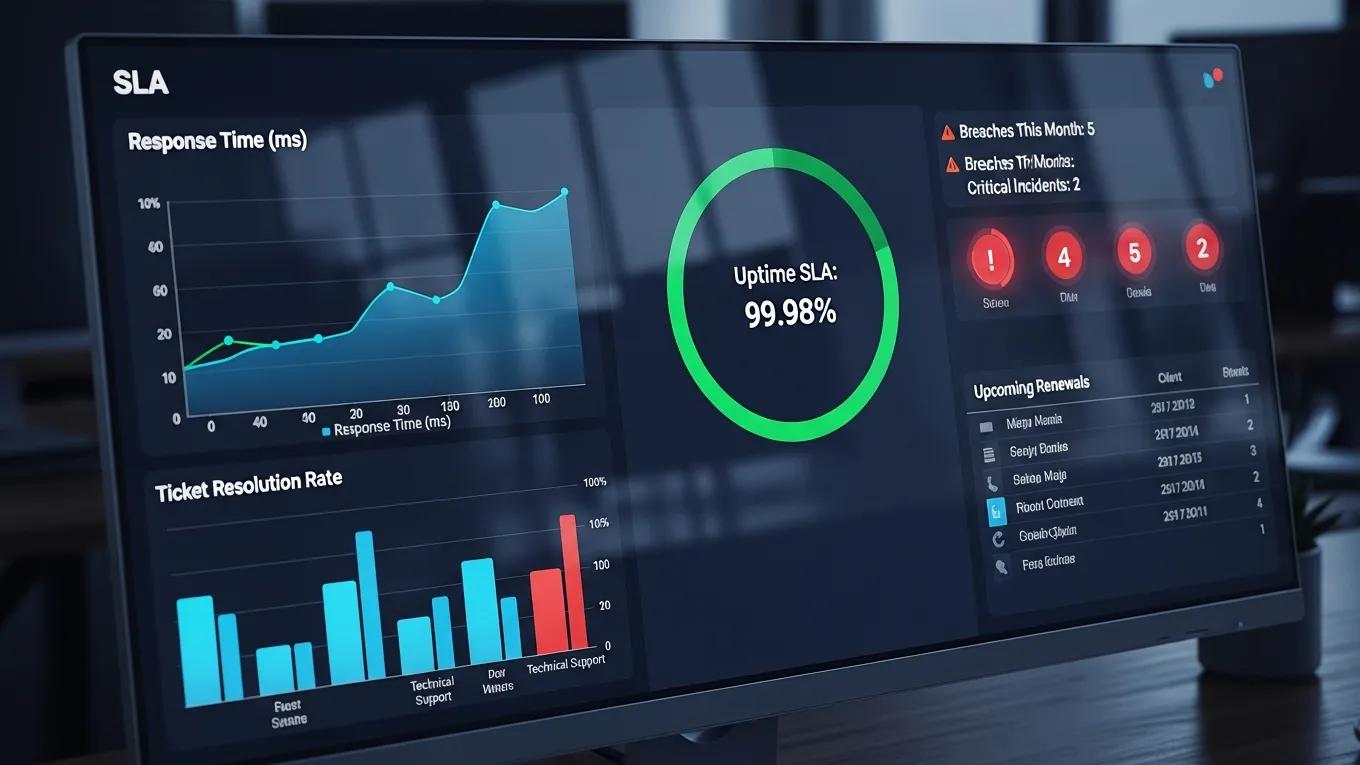
Delivery playbooks operationalize SLAs by specifying the measurable service attributes, thresholds, and reporting requirements that define acceptable performance.
- Response Times : The maximum time allowed for acknowledging and responding to service requests.
- Resolution Times : The expected duration for resolving issues or completing service requests.
- Availability : The percentage of time services are operational and accessible to users.
Embedding these metrics into playbooks ensures stakeholders share a consistent interpretation of obligations and performance expectations, which supports compliance and service delivery governance.
Which Governance Policies Ensure Effective Delivery Playbook Implementation?
Governance policies establish the control environment required to implement and maintain delivery playbooks, driving accountability and continuous improvement.
- Change Management : Procedures for managing changes to service delivery processes, ensuring that all modifications are documented and approved.
- Quality Assurance : Standards and practices that ensure services meet predefined quality criteria before delivery.
- Risk Management : Strategies for identifying, assessing, and mitigating risks associated with service delivery.
Applying these governance policies aligns delivery processes with business objectives and regulatory requirements while maintaining operational control.
How Do Service Level Agreements Enhance Service Delivery and Compliance?
SLAs provide explicit performance criteria and accountability mechanisms that function as benchmarks for operational performance and regulatory adherence.
- Clarity of Expectations : SLAs clearly define what is expected from service providers, reducing ambiguity and misunderstandings.
- Performance Measurement : They provide a framework for measuring service performance against agreed-upon metrics, facilitating continuous improvement.
- Accountability : SLAs establish accountability for service providers, ensuring they are held responsible for meeting performance standards.
Well‑defined SLAs enable organizations to monitor performance objectively and implement corrective measures when standards are not met.
What Are Best Practices for SLA Metrics and Performance Measurement?
Organizations should apply rigorous criteria and governance to SLA metrics to ensure they remain actionable and aligned with business outcomes.
- SMART Criteria : Ensure that SLA metrics are Specific, Measurable, Achievable, Relevant, and Time-bound.
- Regular Reviews : Conduct periodic reviews of SLA performance to identify areas for improvement and adjust metrics as necessary.
- Stakeholder Involvement : Involve key stakeholders in the development and review of SLAs to ensure alignment with business objectives.
Consistent application of these practices preserves metric integrity and supports data-driven decisions for service improvement.
How Is SLA Compliance Monitored and Enforced in Enterprise Environments?
Robust monitoring and enforcement mechanisms are required to verify SLA adherence and to remediate exceptions in a timely manner.
- Automated Monitoring Tools : Utilize software solutions that automatically track SLA performance metrics in real-time.
- Regular Reporting : Establish a reporting framework that provides stakeholders with insights into SLA compliance and performance trends.
- Penalties and Incentives : Implement a system of penalties for non-compliance and incentives for exceeding performance expectations.
These mechanisms provide governance teams with the visibility and enforcement levers necessary to maintain SLA integrity.
What Role Does AI Governance Play in Enterprise Delivery Management?

AI governance defines the policies, controls, and operational processes that ensure AI systems are deployed ethically, securely, and in alignment with business objectives.
- Risk Mitigation : AI governance helps identify and mitigate risks associated with the deployment of AI technologies, ensuring that they are used responsibly.
- Compliance Assurance : It ensures that AI systems comply with relevant regulations and ethical standards, protecting organizations from potential legal issues.
- Performance Optimization : By establishing clear guidelines for AI usage, organizations can optimize the performance of AI systems in service delivery.
Establishing AI governance is a prerequisite for integrating AI into delivery processes while managing legal, ethical, and operational risk.
A comprehensive playbook for AI and machine learning provides senior leaders with structured guidance to improve operational efficiency and customer engagement.
AI/ML Playbook for Enterprise Performance & Operational Efficiency
The integration of artificial intelligence (AI) and machine learning (ML) is a strategic capability for organizations pursuing innovation and sustained growth. This paper presents a managerial framework and an actionable playbook for senior leaders, outlining strategic steps and empirical examples to embed AI/ML technologies within organizational processes to enhance operational efficiency and customer engagement.
Managerial insights for AI/
ML implementation: a playbook for successful organizational integration, AA Abonamah, 2024
How Does AI Governance Mitigate Risks in Service Delivery?
AI governance reduces deployment risk by imposing controls for ethical conduct, bias detection, data protection, and operational validation.
- Ethical Guidelines : Developing ethical guidelines for AI usage that prioritize transparency, fairness, and accountability.
- Risk Assessment Frameworks : Implementing frameworks for assessing the potential risks associated with AI deployment, including bias and data privacy concerns.
- Continuous Monitoring : Establishing processes for the ongoing monitoring of AI systems to ensure compliance with ethical standards and performance expectations.
These controls enable organizations to deploy AI capabilities while maintaining compliance and reducing operational exposure.
Which AI Governance Frameworks Integrate with Delivery Playbooks and SLAs?
Multiple established frameworks can be incorporated into delivery playbooks and SLAs to govern AI-related risks and practices.
- The AI Ethics Guidelines : A set of principles that guide organizations in the ethical use of AI technologies.
- ISO/IEC 27001 : An international standard for information security management that can be adapted to include AI governance considerations.
- NIST AI Risk Management Framework : A framework developed by the National Institute of Standards and Technology that provides guidelines for managing risks associated with AI technologies.
Integrating these frameworks into playbooks and SLAs supports consistent governance and regulatory alignment for AI initiatives.
How Is Risk Management Incorporated into SLA Governance Frameworks?
Risk management within SLA governance provides a structured approach to identify, evaluate, and mitigate threats that could impact service delivery.
- Risk Identification : Systematically identifying potential risks that could impact service delivery, including operational, financial, and reputational risks.
- Risk Assessment : Evaluating the likelihood and impact of identified risks to prioritize mitigation efforts.
- Risk Mitigation Strategies : Developing and implementing strategies to mitigate identified risks, ensuring that service delivery remains uninterrupted.
Embedding risk management into SLA governance enables proactive controls and reduces the probability of service disruptions.
Empirical research underscores the necessity of robust risk management frameworks to prevent SLA violations, particularly in cloud service contexts.
Risk Management Framework for SLA Compliance & Violation Prevention
Risk management is a critical concern for service providers seeking to avoid SLA violations. Cloud environments introduce elastic resource consumption that must be reflected in viable SLAs and active management practices. After an SLA is agreed between provider and consumer, ongoing monitoring is required and, where a violation is predicted, preemptive actions must be executed. This paper proposes a Risk Management Framework to reduce the probability of SLA violation (RMF‑SLA) and to assist cloud service providers in managing service‑level risk.
Risk management framework to avoid SLA violation in cloud from a provider’s perspective, W Hussain, 2016
What Strategies Address Enterprise Risks in SLA Compliance?
Effective risk mitigation for SLA compliance combines audit, capability development, and incident preparedness.
- Regular Audits : Conducting regular audits of SLA compliance to identify potential risks and areas for improvement.
- Training and Awareness : Providing training for employees on SLA compliance and risk management practices to foster a culture of accountability.
- Incident Response Plans : Developing incident response plans that outline procedures for addressing SLA breaches and mitigating their impact.
These measures maintain compliance and strengthen organizational resilience against service disruptions.
How Do Delivery Governance Models Support Risk Management?
Delivery governance models provide the organizational structure and process controls necessary to identify and mitigate delivery risks.
- Clear Accountability : Establishing clear lines of accountability for service delivery, ensuring that individuals are responsible for managing risks.
- Standardized Processes : Implementing standardized processes for service delivery that incorporate risk management practices.
- Continuous Improvement : Fostering a culture of continuous improvement that encourages organizations to regularly assess and enhance their risk management practices.
Integrating risk management into governance models enhances operational predictability and elevates service quality.
What Are Effective Consulting and Advisory Services for Delivery Governance?
Consulting and advisory engagements provide subject-matter expertise, structured methodologies, and implementation support to establish and operationalize delivery governance.
- Tailored Solutions : Providing customized solutions that address the unique needs and challenges of each organization.
- Expert Guidance : Offering insights and recommendations based on industry best practices and emerging trends.
- Implementation Support : Assisting organizations in the implementation of delivery governance frameworks and SLAs to ensure successful adoption.
Engaging experienced consultants accelerates governance maturity and reduces execution risk during governance transitions.
How Do Consulting Services Facilitate Digital Transformation and SLA Optimization?
Consulting practices support digital transformation and SLA optimization through structured change management, technology integration, and performance measurement.
- Change Management : Assisting organizations in managing the cultural and operational changes associated with digital transformation.
- Technology Integration : Providing expertise in integrating new technologies that enhance service delivery and compliance with SLAs.
- Performance Measurement : Helping organizations establish metrics and benchmarks for measuring the success of digital transformation initiatives.
By aligning governance, technology, and organizational capability, consulting services enable measurable improvements in SLA performance and transformation outcomes.
What Case Studies Demonstrate AI Governance Improving SLA Performance?
Documented implementations show that integrating AI governance with delivery processes can yield measurable gains in efficiency, compliance, and customer experience.
- Increased Efficiency : Organizations that adopted AI governance frameworks reported significant improvements in operational efficiency and service delivery times.
- Enhanced Compliance : Companies that integrated AI governance into their SLAs experienced higher levels of compliance with service standards.
- Improved Customer Satisfaction : Organizations that leveraged AI technologies to optimize service delivery reported increased customer satisfaction and loyalty.
These case studies provide empirical evidence that AI governance can strengthen SLA performance when integrated with delivery controls.
How Can Enterprises Optimize Delivery Governance for Digital Transformation Success?
Optimizing delivery governance requires aligning methodologies, analytics, and stakeholder processes to support scalable transformation.
- Agile Methodologies : Adopting agile methodologies that promote flexibility and responsiveness in service delivery.
- Data-Driven Decision Making : Utilizing data analytics to inform decision-making processes and enhance service delivery outcomes.
- Stakeholder Engagement : Involving stakeholders in the governance process to ensure alignment with organizational goals and objectives.
Implementing these strategies increases the likelihood of achieving predictable, measurable outcomes from digital initiatives.
A strategic playbook for enterprise application modernization is a prerequisite for improving scalability, flexibility, and user experience during technology modernization efforts.
Enterprise Application Modernization Playbook for Digital Transformation
Modernizing legacy enterprise applications is a strategic requirement for organizations pursuing greater scalability, flexibility, and improved user experience. This paper presents a playbook for transitioning from monolithic architectures to microservices and headless CMS implementations. Based on empirical case study data, the playbook outlines a decomposition strategy, CI/CD alignment, performance considerations, and separation of frontend and backend concerns using headless CMS patterns.
A playbook for enterprise application modernization using microservices and headless CMS, S Chintalapudi, 2025
Which Delivery Governance Frameworks Support Scalable Enterprise Systems?
Several established governance frameworks provide the policies and process models required to manage and scale enterprise service delivery effectively.
- ITIL (Information Technology Infrastructure Library) : A widely adopted framework that provides best practices for IT service management.
- COBIT (Control Objectives for Information and Related Technologies) : A framework that focuses on governance and management of enterprise IT.
- Agile Governance Frameworks : Frameworks that promote flexibility and adaptability in service delivery, enabling organizations to respond quickly to changing market conditions.
Integrating these frameworks into governance practices enables organizations to scale operations while preserving control and quality.
What Metrics Indicate Successful Delivery Governance and SLA Management?
A focused set of performance indicators provides objective evidence of governance effectiveness and SLA adherence.
- SLA Compliance Rate : The percentage of SLAs that are met within the specified timeframes.
- Customer Satisfaction Scores : Metrics that gauge customer satisfaction with service delivery and overall experience.
- Operational Efficiency : Measures of how effectively resources are utilized in service delivery processes.
Regular analysis of these metrics supports continuous improvement and informed governance decisions.
Frequently Asked Questions
What is the importance of aligning delivery playbooks with business objectives?
Aligning playbooks with business objectives ensures that operational processes drive measurable strategic outcomes. This alignment improves resource prioritization, operational efficiency, and organizational focus, enabling faster response to market requirements and improved customer outcomes.
How can organizations ensure continuous improvement in their delivery governance frameworks?
Continuous improvement is achieved through scheduled review cycles, structured feedback mechanisms, audits, and performance analytics. Embedding these practices within governance processes and promoting organizational learning supports iterative enhancement of controls and procedures.
What role does stakeholder engagement play in effective delivery governance?
Stakeholder engagement ensures governance decisions reflect organizational priorities and operational realities. Involving stakeholders increases transparency, facilitates alignment, and assigns clear ownership for outcomes, which improves implementation and accountability.
How can organizations leverage technology to enhance SLA compliance?
Organizations should deploy automated monitoring, analytics, and alerting systems to track SLA metrics in real time. These technologies enable proactive breach detection, root‑cause analysis, and coordinated remediation, thereby improving adherence to agreed service levels.
What are the challenges of implementing AI governance in delivery management?
Key challenges include ensuring regulatory compliance, protecting data privacy, detecting and mitigating algorithmic bias, and integrating AI controls into legacy processes. Addressing these challenges requires cross‑functional governance, technical validation, and targeted training programs.
How do delivery governance frameworks adapt to changing market conditions?
Effective frameworks incorporate flexibility through agile practices, regular performance reviews, and stakeholder feedback loops. These mechanisms permit rapid adjustment of processes and priorities in response to evolving market signals.
What metrics should organizations track to evaluate the effectiveness of their delivery governance?
Organizations should monitor SLA compliance rates, customer satisfaction indices, operational efficiency metrics, incident frequency, and mean time to resolution. Analyzing these indicators identifies governance strengths and areas requiring corrective action.
Conclusion
Comprehensive delivery playbooks, SLAs, and governance frameworks are necessary components for optimizing enterprise performance, mitigating risk, and ensuring regulatory adherence. These instruments improve service delivery outcomes and support digital transformation when combined with targeted consulting and governance expertise. Our tailored solutions are structured to support organizations in maturing delivery governance and achieving operational excellence.