


Comprehensive Roadmap Template for AI Projects: Strategic AI Project Management and Governance
Artificial intelligence (AI) adoption requires a structured implementation approach. A comprehensive roadmap functions as a strategic guide, defining phases, governance constructs, and operational practices required for effective AI deployment. The following content examines the planning, development, deployment, and monitoring stages, and explains how to align AI initiatives with broader digital transformation objectives while applying governance measures to mitigate implementation risks. This framework supports organizational efforts to manage complexity and improve operational performance.
What Are the Essential Phases of AI Implementation in Enterprise Projects?
Enterprise AI implementations proceed through discrete phases that collectively determine project outcomes: planning, development, deployment, and monitoring. Treating these phases as an integrated lifecycle enables organizations to allocate resources, sequence activities, and define realistic timelines for deliverables and milestones.
How to Define Planning and Development Stages for AI Projects

The planning stage establishes objectives, identifies stakeholders, and assesses required resources and constraints. It sets scope, success criteria, and governance boundaries for the project. The development stage concentrates on model construction, including data collection, algorithm selection, feature engineering, and iterative testing. Effective development relies on structured feedback loops and disciplined cross-functional communication to validate assumptions and refine the model.
What Are Best Practices for Deployment and Monitoring Phases
Deployment integrates the AI model into operational systems and processes; best practices include controlled testing in production-like environments and verification of scalability and resilience. Monitoring requires systematic performance tracking using predefined metrics and mechanisms for model maintenance. Organizations should define key performance indicators (KPIs) and operational thresholds to trigger retraining, rollback, or remediation actions based on observed performance and user feedback.
How Does Artificial Intelligence Governance Ensure Risk Mitigation in AI Projects?
AI governance establishes policies, roles, and controls to manage ethical, legal, and operational risks throughout the project lifecycle. Clearly defined governance structures ensure compliance with regulatory obligations, enforce ethical standards, and provide accountability mechanisms that increase stakeholder confidence in deployed systems.
What Frameworks Support Effective AI Governance in Enterprises?
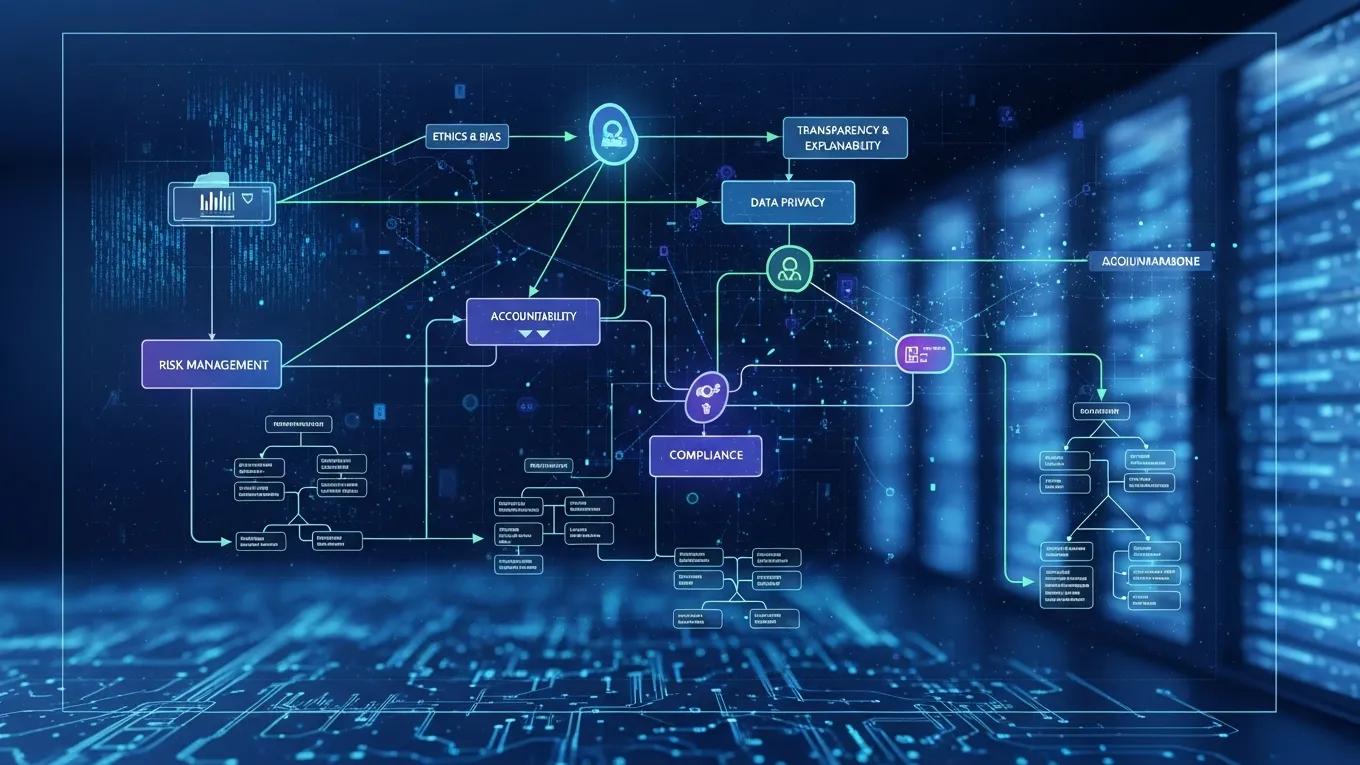
Frameworks such as AI Ethics Guidelines and AI Risk Management Frameworks offer prescriptive approaches to govern design, development, and deployment activities. These frameworks emphasize transparency, accountability, and alignment with legal and societal norms. Adopting such frameworks assists organizations in operationalizing governance and embedding responsible practices into project workflows.
How to Manage Operational and Ethical Risks in AI Implementations
Risk management for AI requires regular assessments to identify vulnerabilities and defined mitigation strategies. Core elements include data privacy controls, bias detection procedures, and mechanisms for algorithmic accountability. Embedding these controls into development and operations reduces exposure and supports sustained public and stakeholder trust.
Further research underscores the need to integrate management of these emerging risks systematically into AI-enabled projects.
Integrating Ethical & Governance Risks in AI Project Management
The study examined how project managers can systematically integrate the management of these emerging risks into AI-enabled projects. Using a qualitative research design, the research drew on semi-structured interviews with project managers, compliance officers, and AI developers in finance, software and related sectors.
Project Risk Management in AI-Enabled Systems: Managing Ethical, Privacy, and Governance Risks, 2026
What Constitutes an Effective Enterprise AI Adoption Strategy?
An effective AI adoption strategy aligns technology initiatives with business objectives, secures stakeholder buy-in, and embeds continuous improvement mechanisms. Addressing organizational barriers and defining governance and measurement practices are essential to operationalize AI at scale.
How to Align AI Roadmaps with Digital Transformation Objectives
Alignment requires mapping AI use cases to defined business outcomes and identifying process improvements that AI enables. When roadmaps reflect enterprise strategy, AI projects become integral to digital transformation rather than isolated pilots, thereby increasing potential impact on operational metrics.
Which Performance Metrics Monitor AI Project Success?
Performance measurement should include quantitative and qualitative indicators. Typical KPIs include user adoption rates, return on investment (ROI), and model accuracy or error rates. Tracking these metrics permits objective assessment of solution effectiveness and informs investment and improvement decisions.
How to Utilize Consulting Services for Structured AI Project Roadmaps?
Consulting services provide domain expertise and structured methodologies for roadmap development. External advisors can assist in defining governance, risk controls, and implementation plans that conform to industry standards and organizational constraints.
What Are the Benefits of Expert AI Governance Consulting?
Engaging AI governance consultants grants access to specialized knowledge in risk management and compliance. Consultants support the design of tailored governance frameworks, advise on regulatory alignment, and contribute practical experience for responsible and effective AI implementation.
How to Integrate AI Roadmap Templates into Enterprise Systems
Integration of roadmap templates requires mapping template elements to existing workflows, customizing artefacts to organizational requirements, and establishing collaboration mechanisms for stakeholders. Proper alignment increases template utility and supports consistent project execution.
Which Tools and Templates Optimize AI Project Management?
Appropriate tools and templates enhance project control, reduce coordination overhead, and standardize documentation. These resources facilitate communication among stakeholders and support consistent delivery practices across AI initiatives.
How to Leverage Flowcharts and Visual Aids for AI Project Phases
Flowcharts and visual aids clarify process flows, expose dependencies, and delineate roles and responsibilities. Applying these visualizations in planning and status reporting improves stakeholder comprehension and operational coordination.
What Structured Data Markup Enhances AI Roadmap Content Visibility
Implementing structured data markup improves content discoverability and search engine indexing. Proper markup supports stakeholder access to roadmap materials and increases the likelihood that relevant audiences locate the organization’s AI resources.
The table summarizes key governance frameworks, their purposes, and principal components. Adoption of these frameworks helps organizations structure governance practices and align AI project management with ethical and regulatory expectations.
AI implementation is a multifaceted process requiring disciplined planning, execution, and monitoring. Understanding project phases, governance frameworks, and operational best practices enables organizations to manage complexity and achieve targeted outcomes. Supplementing internal capabilities with external advisory services and appropriate tools further supports strategic and compliant AI deployment.
Frequently Asked Questions
What are the common challenges faced during AI project implementation?
Common challenges include insufficient data quality, shortages of skilled personnel, and organizational resistance to change. Poor data quality degrades model validity. Talent gaps limit development and operational capabilities. Resistance often arises from concerns about workforce impact or uncertainty regarding AI efficacy. Addressing these issues requires structured training programs, clear stakeholder communication, and targeted engagement plans.
How can organizations ensure ethical AI practices?
Ethical AI practices are supported by a formal governance framework that includes ethical guidelines, compliance controls, and regular system audits. Conducting bias assessments, ensuring transparency in decision logic, and involving diverse teams in development reduce ethical risk. Incorporating stakeholder feedback and public accountability mechanisms further reinforces responsible practice.
What role does stakeholder engagement play in AI project success?
Stakeholder engagement ensures that requirements, constraints, and expectations are captured throughout the project lifecycle. Involving stakeholders yields diverse perspectives that improve solution relevance and acceptance. Regular communication and feedback loops maintain alignment with business objectives and reduce implementation friction.
How can organizations measure the ROI of AI projects?
Measuring ROI requires predefined KPIs and a combination of quantitative and qualitative indicators. Quantitative measures include cost reductions, efficiency gains, and revenue increases attributable to AI. Qualitative measures, such as customer satisfaction and employee engagement, provide context on broader organizational impact. Baseline measurements and ongoing tracking enable evidence-based evaluation.
What are the best practices for continuous improvement in AI projects?
Continuous improvement relies on iterative development cycles, scheduled model updates driven by new data, and formal feedback mechanisms. Establishing a learning-oriented culture and performing post-implementation reviews capture lessons learned and identify opportunities for enhancement as business needs and technologies evolve.
How can organizations effectively integrate AI with existing systems?
Effective integration begins with a comprehensive analysis of current workflows to identify integration points and technical constraints. Solutions should be adapted to existing infrastructure and accompanied by staff training and operational support. Continuous monitoring and stakeholder feedback facilitate incremental refinement and stable system performance.
Conclusion
Implementing a comprehensive AI project roadmap enables organizations to align AI initiatives with business objectives and ethical standards while managing operational complexity. Clear phase definitions, robust governance, and adherence to best practices improve the likelihood of successful outcomes. Engaging qualified consultants and applying proven tools further strengthens execution. Review available resources and templates to operationalize a structured approach to AI project management.