


Engage with Dr. George Dagliyan
As artificial intelligence capabilities advance, organizations are increasing the adoption of AI program dashboards, structured reporting, and alerting mechanisms to strengthen governance and risk management. These solutions surface performance metrics and operational indicators that enable executives to align decisions with strategic objectives. This article examines the function of AI dashboards, the contribution of reporting and alerts to enterprise performance analytics, and their role within risk management frameworks. It also outlines essential features of leading AI reporting tools, current industry trends, and implementation best practices. A clearer understanding of these components supports organizations in managing digital transformation and maintaining regulatory compliance.
What Are AI Program Dashboards and Their Role in Enterprise Performance Analytics?
AI program dashboards are purpose-built interfaces for visualizing and analyzing key performance indicators (KPIs) associated with AI initiatives. They aggregate data from multiple sources to present a consolidated view of operational and model-level metrics that inform strategic governance. By providing near-real-time visibility, these dashboards enable monitoring of progress, detection of trends, and evidence-based decision making that supports program performance.
Research demonstrates AI’s influence on data visualization and dashboard design to support dynamic strategic and operational decision processes within enterprises.
AI-Driven Dashboards for Enterprise Strategic Decision Making
This study conducts a comprehensive systematic review to examine how artificial intelligence (AI) is transforming data visualization, with a particular focus on dashboard design and interactive analytics within enterprise decision-making environments. Guided by the Preferred Reporting Items for Systematic Reviews and Meta-Analyses (PRISMA) framework, a total of 146 peer-reviewed articles published across major academic databases were screened, analyzed, and synthesized to ensure methodological rigor and transparency. The review explores how AI-driven modules—such as automated chart recommendation systems, real-time anomaly detection, adaptive visual interfaces, and predictive modeling engines—are reshaping dashboards from static reporting tools into dynamic cognitive environments that actively support strategic and operational decision processes. A key finding is the convergence of AI techniques with cognitive and perceptual design principles, where visual hierarchies,
Artificial intelligence in data visualization: Reviewing dashboard design and interactive analytics for enterprise decision-making, R Sultana, 2025
How Do AI Dashboards Monitor Key Performance Indicators in AI Programs?

AI dashboards monitor a suite of KPIs used to evaluate program success, including model-level metrics, data pipeline throughput, and user interaction measures. Common indicators include model accuracy, data processing latency, and user engagement statistics. Continuous monitoring against these KPIs verifies alignment with business objectives and permits timely corrective actions based on observed performance deviations.
Which Metrics Are Critical for Effective AI Program Reporting?
Effective AI program reporting requires selection of metrics that accurately reflect system health, model reliability, and operational adoption. Typical categories include model performance, data quality, and user adoption metrics.
- Model Performance : Metrics such as precision, recall, and F1 score provide insights into the effectiveness of AI models.
- Data Quality : Monitoring data integrity and completeness ensures that AI systems operate on reliable information.
- User Adoption Rates : Understanding how users interact with AI tools helps gauge their effectiveness and areas for improvement.
These measures inform governance decisions and support regulatory compliance by documenting operational standards and performance thresholds.
How Do Adoption Monitoring Alerts Enhance AI Risk Management Frameworks?
Adoption monitoring alerts strengthen AI risk management by delivering timely notifications on system performance and usage anomalies. Alerts enable early identification of deviations from expected behavior, supporting proactive mitigation and incident response. When incorporated into governance workflows, alerting mechanisms help maintain adherence to industry standards and regulatory requirements.
This proactive methodology corresponds with recent studies that document a shift from reactive to proactive operational paradigms enabled by intelligent alerting systems.
Proactive AI Alerting Systems for Enterprise Operations
This article explores the transformative shift from reactive to proactive operational paradigms enabled by intelligent alerting systems that facilitate real-time human-AI collaboration. Focusing on implementations within fleet management and electric vehicle infrastructure, the paper examines how advanced technologies—including stream analytics, machine learning models, and collaborative interfaces—fundamentally alter traditional monitoring approaches. The research identifies key components of successful intelligent alerting systems and documents their impact through detailed case studies that demonstrate substantial operational improvements. The evolution of the human role from reactive troubleshooter to strategic overseer is analyzed across four critical dimensions: complementary expertise allocation, trust calibration mechanisms, knowledge feedback loops, and cognitive load management. Looking forward, the article investigates emerging developments in multimodal monit
From reactive to proactive: Real-Time Human-AI collaboration in intelligent alerting systems, PD Gawande, 2025
What Is the Impact of Real-Time Adoption Alerts on Enterprise Compliance?
Real-time adoption alerts improve compliance outcomes by enabling rapid stakeholder response to protocol deviations and threshold breaches. Alerts that surface deviations from defined benchmarks support immediate remediation and reduce the window of noncompliance. Consistent alerting also contributes to auditability and reinforces organizational accountability.
How Do Adoption Alerts Integrate with AI Governance Reporting Platforms?
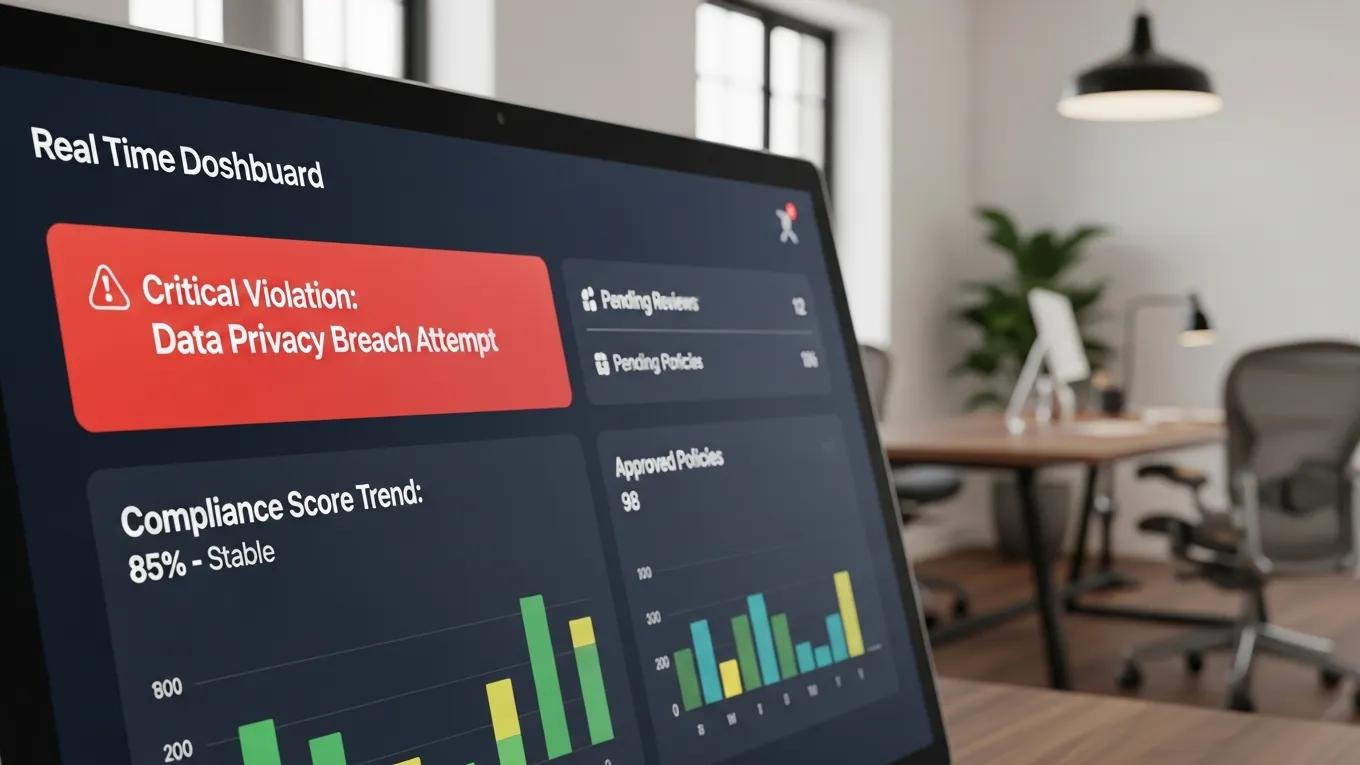
Integrating adoption alerts into AI governance reporting platforms centralizes operational signals within a unified reporting layer. Centralization streamlines compliance workflows, ensures consistent stakeholder access to critical information, and supports cross-functional coordination for incident response and governance reporting.
This integrated approach highlights the need for a unified, AI-driven data governance framework across enterprise platforms.
AI-Driven Unified Governance for Enterprise Platforms
This paper proposes a comprehensive AI-Driven Unified Data Governance Framework designed for modern enterprise platforms. By integrating artificial intelligence (AI) and machine learning (ML) at the core of the data governance lifecycle, the proposed framework automates critical functions such as data discovery, classification, quality assurance, lineage tracking, and policy enforcement.
AI-Driven Unified Data Governance Framework for Enterprise Platforms, 2026
What Features Define Leading Enterprise AI Reporting Tools and Governance Platforms?
Leading enterprise AI reporting tools exhibit features that support operational scalability, data fidelity, and user adoption. Core capabilities typically include configurable interfaces, modular dashboards, and robust data integration and ingestion pipelines. These features enable organizations to adapt reporting to domain-specific requirements and maintain consistency across deployments.
Which Functionalities Support Comprehensive AI Program Dashboard Design?
Comprehensive dashboard design emphasizes usability and timely access to accurate information. Core functionalities include configurable visualizations, continuous data updates, and collaboration capabilities that enable shared analysis and decision handoffs.
- Customizable Visualizations : Users can tailor dashboards to display the most relevant metrics for their specific needs.
- Real-Time Data Updates : Ensures that users have access to the latest information, facilitating timely decision-making.
- Collaboration Tools : Features that allow teams to share insights and collaborate on data analysis enhance overall effectiveness.
These functionalities improve stakeholder engagement with data and increase the likelihood of deriving actionable insights from dashboard outputs.
How Do AI Governance Reporting Platforms Facilitate Strategic Decision-Making?
AI governance reporting platforms supply executives with consolidated analyses and visualizations that support trend identification, risk assessment, and performance evaluation. By exposing integrated insights, these platforms enable alignment of AI investments with organizational objectives and evaluation of return on investment.
What Are the Latest Industry Trends and Case Studies in AI Program Dashboards and Alerts?
AI program dashboards and alerting capabilities continue to evolve alongside advances in analytics and systems integration. Current trends include broader use of machine learning for predictive analytics and deeper integration of AI modules within existing enterprise technology stacks.
How Has AI Adoption Growth Influenced Dashboard and Alert Innovations in 2023-2024?
Increased AI adoption in 2023–2024 has accelerated development of analytics-driven dashboards and more sophisticated alerting logic. Organizations are deploying advanced analytics and cloud-native architectures to scale monitoring and to provide richer operational insights.
What Case Studies Demonstrate the Effectiveness of AI Risk Management Dashboards?
Multiple case studies document measurable benefits from AI risk management dashboards. For example, a major financial institution deployed a dashboard integrating real-time risk assessments with compliance monitoring and reported a reduction in compliance incidents following implementation.
How Can Consulting and Advisory Services Optimize AI Program Dashboard Implementation?
Consulting and advisory services provide domain expertise to design, implement, and integrate AI dashboards in alignment with organizational strategy. Advisors apply best practices for governance, change management, and technical deployment to reduce implementation risk and accelerate time to value.
What Are Best Practices for Designing AI Program Dashboards and Adoption Alerts?
Best practices for designing AI program dashboards and adoption alerts include:
- User-Centric Design : Prioritize the needs and preferences of end-users to enhance engagement and usability.
- Iterative Development : Employ an agile approach to continuously refine dashboards based on user feedback and evolving requirements.
- Comprehensive Training : Provide thorough training for users to ensure they can effectively utilize the dashboards and alerts.
Adhering to these practices improves dashboard effectiveness, supports sustained adoption, and contributes to measurable performance and compliance improvements.
How Do Speaking Engagements Support Enterprise AI Governance Education?
Speaking engagements provide structured forums for presenting case studies, best practices, and governance frameworks to executive and practitioner audiences. These events disseminate applied knowledge and facilitate professional dialogue on implementation challenges and regulatory developments.
The table above summarizes essential features of leading AI reporting tools and their contributions to operational performance and compliance.
The table outlines critical metrics for AI program reporting and their relevance to governance and compliance processes.
Frequently Asked Questions
What are the benefits of using AI program dashboards in organizations?
AI program dashboards increase visibility into KPIs and provide near-real-time analytical capability. By consolidating data from disparate sources, dashboards support faster, evidence-based decisions, trend analysis, and performance monitoring. Clear visualizations reduce interpretive complexity and improve cross-functional collaboration.
How can organizations ensure the successful implementation of AI reporting tools?
Successful implementation requires a clear definition of objectives, early stakeholder engagement, and structured requirements capture. Invest in user training and support, adopt iterative development practices, and integrate reporting tools with existing systems to streamline workflows and improve adoption.
What challenges do organizations face when adopting AI dashboards?
Common challenges include data integration complexity, change resistance, and insufficient user training. Integrating heterogeneous data sources can introduce inconsistencies, and inadequate training impedes adoption. Address these issues through robust change management, data governance, and comprehensive training programs.
How do AI dashboards support compliance with regulations?
AI dashboards support compliance by enabling continuous monitoring and structured reporting of key metrics. Alerting mechanisms identify deviations from regulatory or internal standards, allowing for prompt remediation. Comprehensive reporting capabilities also provide documented evidence for audits and regulatory reviews.
What role do user feedback and iterative design play in dashboard effectiveness?
User feedback and iterative design are essential to align dashboards with operational workflows and user needs. Continuous refinement based on practical use uncovers usability issues, improves relevance, and increases engagement, producing a more effective decision-support tool.
How can organizations measure the success of their AI program dashboards?
Measure success using adoption metrics, engagement frequency, and the accuracy and actionability of insights produced. Assess the dashboards’ impact on decision quality and operational performance, and use regular user feedback to guide ongoing enhancements.
Conclusion
Implementing AI program dashboards and reporting tools enhances governance and risk management by delivering timely visibility into performance metrics. These solutions enable decision-makers to align AI initiatives with strategic objectives, support compliance, and reinforce accountability. Leveraging current AI capabilities allows organizations to optimize operations and improve outcomes. Our consulting services can assist with designing and implementing AI solutions tailored to organizational requirements.