


AI Tools and Remote Collaboration Best Practices: Implementing Effective Governance and Strategy
The integration of artificial intelligence tools into remote collaboration is a strategic priority for organizations seeking measurable improvements in productivity and operational efficiency. This article examines best practices for implementing AI governance frameworks and operational strategies that enable effective distributed collaboration. It outlines the role of AI governance, identifies tools that optimize remote teamwork, and describes approaches to manage risks associated with AI adoption. A clear understanding of these elements supports successful digital transformation initiatives.
This discussion addresses four primary areas: the role of AI governance frameworks in remote collaboration; leading AI tools that enhance teamwork; risk-management strategies for AI adoption; and the components of an effective enterprise AI strategy. The content is intended to provide practical insights for executives and organizations seeking to leverage AI to improve collaboration in distributed work environments.
What Are AI Governance Frameworks and Their Role in Remote Collaboration?
AI governance frameworks constitute structured guidelines that enable organizations to manage the ethical and operational use of AI technologies. These frameworks align AI systems with organizational values and regulatory obligations to support trust and accountability in remote collaboration. By establishing explicit protocols, organizations can mitigate deployment risks and ensure responsible, effective use of AI tools.
Research similarly emphasizes the central role of AI governance frameworks in maximizing benefits while minimizing risks at a global scale.
AI Governance Frameworks: Maximizing Benefits & Minimizing Risks
In this chapter the authors propose a framework for global cooperation on artificial intelligence governance designed to enable benefits while preventing and reducing risks. The text explains why AI requires governance and why such governance necessitates international cooperation. Particular emphasis is placed on establishing a level playing field that protects citizens globally, enables socially beneficial innovation, and encourages healthy competition to distribute AI’s benefits.
A framework for global cooperation on artificial intelligence and its governance, NA Smuha, 2021
Defining AI Governance in Enterprise Environments
In enterprise contexts, AI governance denotes the policies and procedures that direct the development, deployment, and operational management of AI systems. Core components include data governance, ethical standards, regulatory compliance, and risk assessment. These elements are fundamental to ensuring AI deployments align with organizational objectives and values, particularly within remote work environments where conventional oversight may be constrained.
How AI Governance Enhances Distributed Team Collaboration
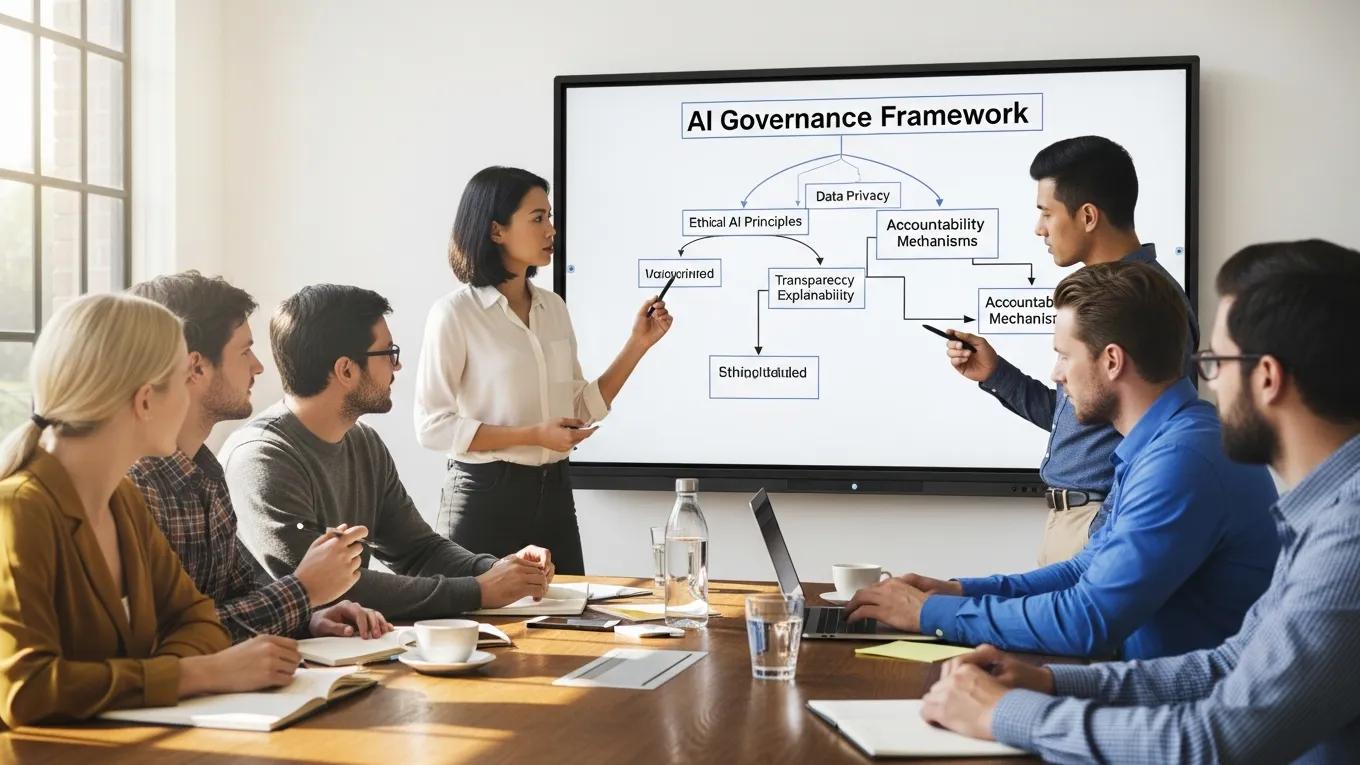
AI governance strengthens distributed team collaboration by establishing accountability and transparency mechanisms. When teams understand and adhere to usage guidelines, their activities align with organizational standards. For example, explicit data usage policies reduce misunderstandings and support trust among team members, which contributes to improved collaboration outcomes.
Further research highlights the practical application of AI in remote environments and indicates that AI-driven cloud workspaces can significantly improve team coordination and safety.
AI Cloud Workspaces: Enhancing Remote Team Coordination & Safety
This paper presents an AI-driven cloud workspace framework intended to enhance team coordination, streamline communication, and reinforce safety compliance across distributed project environments. The proposed system integrates real-time analytics, intelligent task orchestration, automated safety monitoring, and context-aware alerts to increase operational visibility and decision support. Machine learning models assess project workflows, detect deviations, forecast bottlenecks, and recommend proactive safety measures.
AI-driven secure cloud workspaces for strengthening coordination and safety compliance in distributed project teams, R Kumar, 2022
Which AI Tools Optimize Remote Team Collaboration?
Several AI tools support remote team collaboration by streamlining communication, enhancing project management, and automating routine workflows. These solutions leverage AI capabilities to improve operational efficiency and facilitate coordinated teamwork across distributed environments.
Overview of Leading Remote Collaboration Platforms with AI Integration
Examples of leading collaboration platforms with integrated AI features include:
- Slack: Offers AI-driven chatbots that assist with task management and information retrieval, enhancing team communication.
- Microsoft Teams: Utilizes AI for real-time translation and transcription, making meetings more accessible for global teams.
- Zoom: Incorporates AI to improve video quality and provide virtual backgrounds, creating a more professional meeting environment.
These platforms improve communication and contribute to a collaborative culture among distributed teams.
Comparative Analysis of AI-Enabled Collaboration Tools for Enterprises
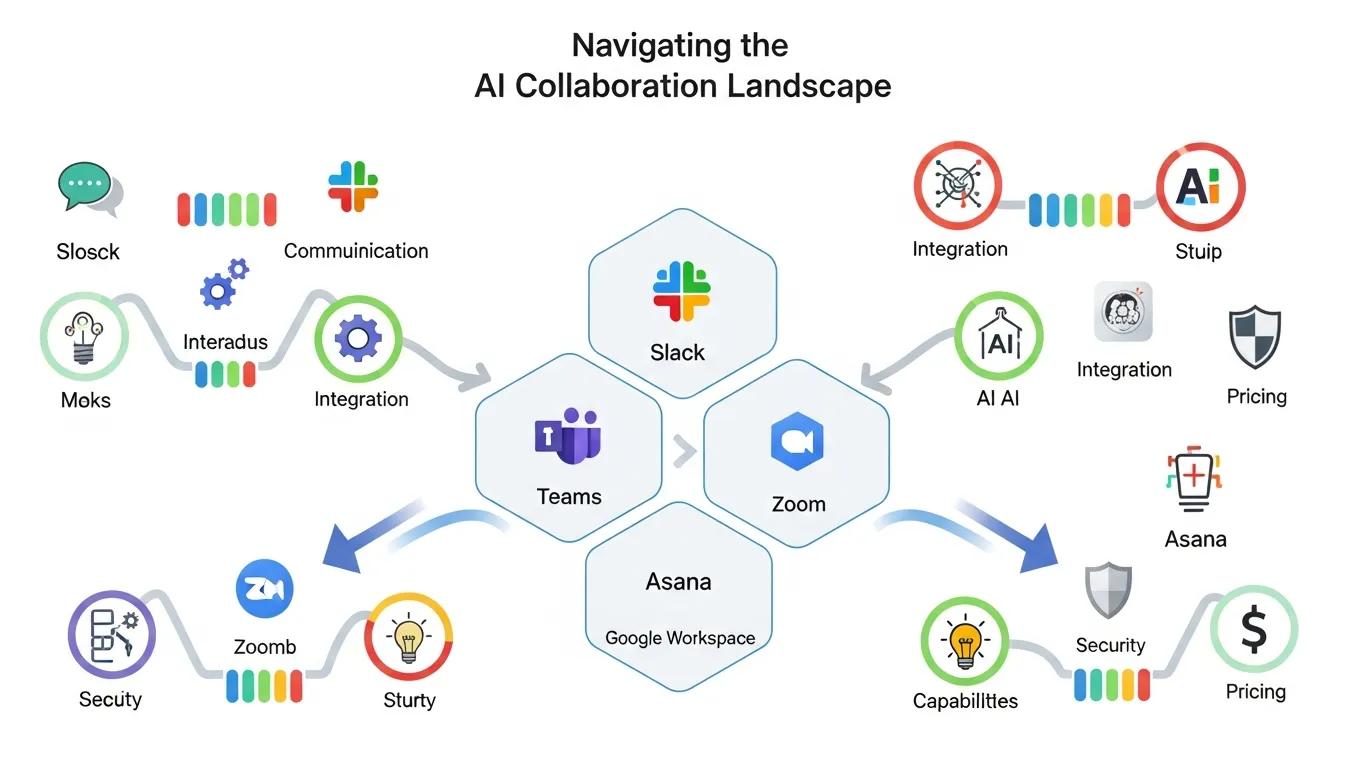
The following table compares principal features to clarify relative strengths and weaknesses of AI-enabled collaboration tools:
The comparison demonstrates how different tools address distinct organizational requirements, enabling selection of the most appropriate solution for specific collaboration objectives.
How to Manage Risk in AI Adoption for Remote Workforces?
Risk management is essential when adopting AI in remote work contexts. Systematic identification of potential hazards and implementation of mitigation measures support a controlled transition to AI-enhanced collaboration.
Identifying Key Risk Factors in AI-Driven Remote Collaboration
Principal risk factors include:
- Data Privacy Risks: The use of AI tools often involves handling sensitive data, which can lead to privacy breaches if not managed properly.
- Loss of Control: Organizations may struggle to maintain oversight of AI systems, leading to unintended consequences.
- Trust Issues: Employees may be hesitant to rely on AI tools if they do not understand how decisions are made.
Recognition of these risks constitutes the initial step in developing effective mitigation strategies.
Strategies for Mitigating AI-Related Risks in Distributed Teams
Organizations can mitigate AI-related risks by implementing the following measures:
- Develop Governance Policies: Establish clear guidelines for AI usage, including data management and ethical considerations.
- Foster a Culture of Trust: Encourage open communication about AI tools and their functions to build trust among team members.
- Regular Training: Provide ongoing training for employees to ensure they understand how to use AI tools effectively and responsibly.
These measures assist organizations in navigating AI adoption complexities while reducing exposure to operational, ethical, and compliance risks.
What Constitutes an Effective Enterprise AI Strategy for Digital Transformation?
An effective enterprise AI strategy is a requisite for digital transformation. It should align AI initiatives with corporate objectives and ensure AI deployments are configured to enhance organizational performance.
Aligning AI Initiatives with Organizational Performance Goals
Aligning AI initiatives with performance targets requires defining key performance indicators (KPIs) that reflect intended outcomes. Establishing measurable objectives enables tracking of AI effectiveness and iterative adjustment. This alignment ensures AI tools support, rather than undermine, organizational success.
Leadership Roles in Driving AI-Enabled Digital Transformation
Leadership is critical to AI-enabled digital transformation. Senior leaders should sponsor AI initiatives, articulate their strategic importance, and cultivate a governance-aware culture that supports responsible innovation. Demonstrated executive commitment facilitates organizational adoption of AI technologies and improves collaborative performance.
How Does Digital Transformation Leadership Influence Remote Collaboration Success?
Digital transformation leadership materially influences remote collaboration outcomes. Leaders who prioritize AI adoption and digital initiatives establish conditions that promote productive teamwork and innovation.
Best Practices for Leading AI Adoption in Remote Teams
Recommended practices for leading AI adoption in remote teams include:
- Engaging Stakeholders: Involve team members in the decision-making process regarding AI tools to ensure buy-in and acceptance.
- Providing Training: Offer comprehensive training programs to equip employees with the skills needed to utilize AI tools effectively.
- Encouraging Feedback: Create channels for employees to provide feedback on AI tools and their impact on collaboration.
These practices increase the probability of successful AI integration within distributed teams.
Measuring Impact of Leadership on AI-Driven Collaboration Outcomes
Organizations can measure leadership impact on AI-driven collaboration using metrics such as:
- Employee Satisfaction: Surveys can gauge how employees feel about AI tools and their effectiveness in facilitating collaboration.
- Productivity Metrics: Tracking productivity levels before and after AI tool implementation can provide insights into their impact.
- Collaboration Quality: Assessing the quality of team interactions and project outcomes can help determine the effectiveness of AI-enhanced collaboration.
Analysis of these metrics provides insight into leadership effectiveness in driving AI adoption and collaboration outcomes.
Frequently Asked Questions
What are the key benefits of using AI tools in remote collaboration?
AI tools improve communication, streamline project management, and automate repetitive tasks to free teams for higher-value work. They provide real-time analytics and operational insights that enable faster, more informed decision making. Collectively, these capabilities increase productivity and enhance collaborative effectiveness in remote teams.
How can organizations ensure data privacy when using AI tools?
Ensure data privacy by implementing comprehensive data governance that specifies how sensitive information is collected, stored, and processed. Conduct regular audits and compliance checks to identify vulnerabilities. Provide employee training on privacy protocols and utilize encryption and access controls to protect data from unauthorized access.
What role does employee training play in successful AI adoption?
Employee training is essential to successful AI adoption. Comprehensive programs should cover tool functionality, integration into workflows, and the ethical considerations surrounding AI use. Sustained learning initiatives increase user competence and confidence, which supports higher engagement and better collaboration outcomes in remote settings.
How can organizations measure the effectiveness of their AI collaboration tools?
Measure effectiveness using quantitative metrics such as user engagement rates, productivity levels, and project completion times, supplemented by qualitative feedback from surveys. Comparing key performance indicators before and after AI implementation provides a basis for assessing impact and guiding iterative improvements.
What challenges might organizations face when implementing AI governance frameworks?
Common challenges include resistance to change, limited understanding of AI technologies among staff, and difficulty aligning governance policies with existing organizational structures. Additionally, ensuring compliance with evolving regulations increases complexity. Address these issues by engaging stakeholders early, communicating governance objectives clearly, and providing targeted training to support adoption.
How can leadership influence the success of AI integration in remote teams?
Leadership influences AI integration by establishing a clear vision and demonstrating sustained commitment to AI initiatives. Effective leaders promote open communication, solicit feedback, involve team members in decision making, and allocate resources and training. This approach empowers employees to adopt AI tools and enhances collaboration and performance across remote teams.
Conclusion
Integrating AI tools into remote collaboration can increase productivity and improve teamwork. Implementing robust AI governance frameworks helps ensure ethical use and mitigate adoption risks. These strategies both streamline workflows and reinforce a culture of trust and accountability among team members. Consult organizational resources to support implementation and to navigate the complexities of AI integration.