


Comprehensive Enterprise AI Strategy and Governance Frameworks for Effective Digital Transformation Leadership
Enterprises must integrate artificial intelligence (AI) into operations while maintaining effective governance. This article examines the essential components of a robust enterprise AI strategy and the governance frameworks that mitigate deployment risks. It provides guidance on aligning AI initiatives with business objectives, identifies adoption challenges, and clarifies leadership responsibilities in digital transformation. Understanding these elements enables organizations to manage integration complexities and improve operational performance.
The discussion defines an effective enterprise AI strategy, outlines core elements of AI governance frameworks, describes primary adoption challenges, and presents best practices for digital transformation leadership. It also examines risk‑management approaches that optimize AI deployment and provides a comprehensive overview of leveraging AI while reducing potential pitfalls.
What Constitutes an Effective Enterprise AI Strategy?
An effective enterprise AI strategy is a structured methodology that aligns AI initiatives with the organization’s strategic objectives. It is necessary to realize AI benefits and to ensure contributions to measurable business outcomes. Successful integration requires deliberate planning across both technological and organizational dimensions.
Key Components of Enterprise AI Integration
Successful AI integration depends on several principal components, including:
- Trust and Governance Structures : Establishing a framework that promotes transparency and accountability in AI decision-making processes.
- Adoption Facilitators and Inhibitors : Identifying factors that either support or hinder the adoption of AI technologies within the organization.
- Operational Resilience Strategies : Developing plans to ensure that AI systems can withstand disruptions and continue to function effectively.
These components collectively form a foundation for AI integration and enable organizations to harness AI capabilities effectively.
One framework further emphasizes the need for structured approaches to address common organizational hurdles and proposes a comprehensive strategy for AI‑augmented enterprise alignment and platform governance.
AI-Augmented Enterprise Alignment & Platform Governance Framework
Organizations pursuing digital transformation frequently encounter systemic fragmentation despite objectives for unified enterprise connectivity. Manifestations include siloed development practices where teams independently construct similar systems, yielding redundant solutions and integration complexity; tool sprawl arising from uncoordinated technology adoption; accumulation of legacy systems that are costly to maintain; and a tendency to revert to waterfall methodologies in the absence of alignment mechanisms. The CONNECT Framework for AI‑Augmented Enterprise Alignment and Platform Governance addresses these persistent challenges through structured principles augmented by intelligent automation: Collaborate to promote cross‑functional alignment, Orchestrate integrated workflows, Normalize archi
CONNECT Framework for AI-Augmented Enterprise Alignment and Platform Governance, AK Vedantham, 2025
Aligning AI Strategy with Business Objectives
Aligning AI strategy with business objectives is necessary to ensure that AI initiatives deliver measurable value. This alignment can be achieved through:
- Methods for Alignment : Utilizing frameworks that connect AI projects with specific business goals, ensuring that every AI initiative has a clear purpose.
- Case Studies of Successful Alignment : Examining organizations that have effectively aligned their AI strategies with business objectives to achieve significant improvements in performance.
- Impact on Business Performance : Understanding how well-aligned AI initiatives can lead to enhanced operational efficiency, increased revenue, and improved customer satisfaction.
Prioritizing alignment improves the likelihood that AI investments will yield measurable returns.
How Do AI Governance Frameworks Mitigate Risks in Enterprises?
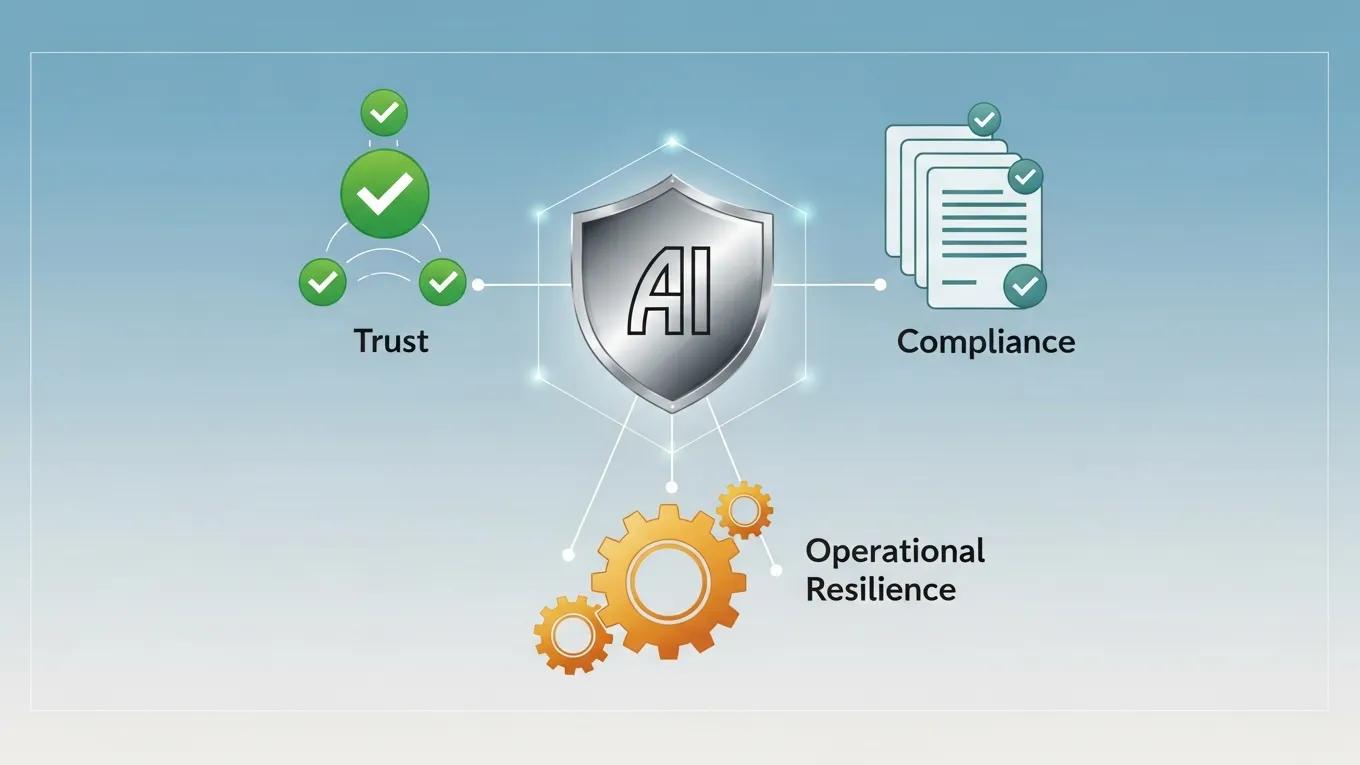
AI governance frameworks are central to managing the risks associated with AI technologies. They establish guidelines and best practices that enable organizations to navigate deployment complexities while maintaining regulatory compliance.
Core Elements of AI Governance Frameworks
Effective AI governance frameworks comprise several core elements, including:
- Trust and Institutional Governance : Establishing a culture of trust that encourages ethical AI use and decision-making.
- Compliance and Regulatory Adherence : Ensuring that AI initiatives comply with relevant laws and regulations to mitigate legal risks.
- Operational Resilience Strategies : Implementing measures to maintain AI system functionality during unforeseen events.
These elements support a responsible AI governance posture and enable organizations to leverage AI technologies while reducing associated risks.
Impact of Governance on AI Risk Management
Governance frameworks materially affect AI risk management by:
- Trust-Building Through Governance : Creating a transparent environment that fosters stakeholder confidence in AI systems.
- Compliance Checks and Their Importance : Regularly assessing AI initiatives to ensure they meet legal and ethical standards.
- Monitoring AI Performance : Establishing metrics and processes for evaluating the effectiveness and reliability of AI systems.
Implementing robust governance practices enables organizations to manage AI-related risks effectively.
What Are the Primary Challenges in AI Adoption for Enterprises?

Despite potential benefits, enterprises frequently encounter significant challenges during AI adoption. Identifying these challenges is a prerequisite for developing effective mitigation strategies.
Technical and Organizational Barriers to AI Implementation
The primary barriers to AI implementation include:
- Infrastructure Limitations : Many organizations lack the necessary technological infrastructure to support AI initiatives.
- Skill Gaps in Workforce : A shortage of skilled professionals who can effectively implement and manage AI technologies poses a significant challenge.
- Resistance from Management : Organizational culture and leadership resistance can hinder the adoption of AI solutions.
Addressing these barriers is essential to achieve successful AI integration.
Strategies to Overcome AI Adoption Challenges
Organizations may employ several strategies to mitigate AI adoption challenges:
- Building Trust and Brand Influence : Establishing a strong brand presence that emphasizes the benefits of AI can help alleviate concerns among stakeholders.
- Enhancing Organizational Readiness : Preparing the workforce through training and development initiatives ensures that employees are equipped to embrace AI technologies.
- Addressing Adoption Inhibitors : Identifying and mitigating factors that impede AI adoption can facilitate a smoother transition to AI-driven operations.
Proactive mitigation of these challenges increases the probability of successful AI implementation.
How Does Digital Transformation Leadership Drive AI Innovation?
Leadership is pivotal to driving AI innovation through digital transformation. Effective leaders direct organizational efforts to leverage AI technologies in support of strategic objectives.
Role of Executive Leadership in AI-Driven Change
Executive leadership is essential for creating an environment conducive to AI-driven change by:
- Creating a Culture of Innovation : Encouraging experimentation and creativity within the organization to explore new AI applications.
- Strategic Capital Allocation : Ensuring that resources are allocated effectively to support AI initiatives.
- Managing Enterprise Risks : Identifying and mitigating risks associated with AI deployment to protect the organization’s interests.
Effective executive leadership is required to navigate the complexities of AI integration.
Research highlights evolving leadership requirements for AI-driven digital transformation, emphasizing the capabilities necessary to drive technology adoption and ensure ethical governance.
AI Leadership for Digital Transformation & Ethical Governance
The transformative effect of AI-driven digitalization requires a paradigm shift in leadership that addresses disruptive innovation, ethical governance, and sustainable business strategy. This research examines the advanced leadership capabilities necessary to drive the adoption and integration of frontier technologies—including artificial intelligence (AI), machine learning (ML), blockchain, and fintech—within the operational ecosystems of multinational corporations and small-to-medium-sized enterprises (SMEs). Digital transformation is a substantive organizational realignment rather than a mere technology transition, requiring leaders with the vision and agility to dismantle silos, foster innovation, and institutionalize sustainability as a core strategic objective.
Strategic leadership in AI-driven digital transformation: Ethical governance, innovation management, and sustainable practices for global enterprises and SMEs, 2025
Best Practices for Leading Digital Transformation Initiatives
To lead digital transformation initiatives successfully, organizations should adopt the following practices:
- Engaging Stakeholders : Involving key stakeholders in the decision-making process to ensure buy-in and support for AI initiatives.
- Continuous Learning and Adaptation : Emphasizing the importance of ongoing learning to keep pace with technological advancements.
- Measuring Success : Establishing clear metrics to evaluate the effectiveness of digital transformation efforts.
These practices improve leadership effectiveness in advancing AI innovation.
Which Risk Management Approaches Optimize AI Deployment in Enterprises?
Effective risk management is necessary to optimize AI deployment. Organizations should implement strategies to identify, assess, and mitigate risks associated with AI technologies.
Risk Identification and Mitigation Techniques in AI Projects
Organizations can apply several techniques to identify and mitigate risks in AI projects, including:
- Risk Assessment Frameworks : Utilizing structured approaches to evaluate potential risks associated with AI initiatives.
- Stakeholder Engagement : Involving stakeholders in the risk assessment process to gain diverse perspectives on potential challenges.
- Continuous Monitoring : Implementing systems for ongoing evaluation of AI performance and risk factors.
These techniques are critical to ensuring the successful deployment of AI technologies.
Measuring and Monitoring AI-Related Enterprise Risks
To measure and monitor AI-related risks effectively, organizations should focus on:
- Key Performance Indicators for AI Risks : Establishing metrics that provide insights into the performance and reliability of AI systems.
- Tools for Monitoring AI Systems : Utilizing advanced analytics and monitoring tools to track AI performance in real-time.
- Reporting and Accountability : Creating transparent reporting mechanisms to ensure accountability for AI-related decisions.
Implementing these measures enhances organizational capacity to manage AI-related risks.
The table summarizes risk management approaches and their respective impact levels, underscoring the need for a comprehensive AI deployment strategy.
In summary, integration of AI into enterprise systems presents both opportunities and challenges. Developing effective AI strategies and governance frameworks enables organizations to manage adoption complexities and reduce associated risks. Leadership is central to fostering innovation and ensuring ethical practice. Through proactive risk management and continuous learning, enterprises can leverage AI technologies to improve operational performance and advance strategic objectives.
Frequently Asked Questions
What are the key benefits of implementing an AI strategy in enterprises?
Implementing an enterprise AI strategy yields benefits such as enhanced operational efficiency, improved decision-making, and potential revenue growth. Automation of routine tasks reallocates human resources to higher‑value activities. Data-driven analysis supports more accurate forecasting and improved customer engagement. A well-executed AI strategy aligns technology investments with business objectives to support innovation and competitive positioning.
How can organizations ensure ethical AI use within their governance frameworks?
Organizations should integrate ethical guidelines into AI governance frameworks, including policies on data privacy, bias mitigation, and decision‑making transparency. Regular training on ethical practices and the establishment of oversight committees to monitor AI applications support compliance with ethical standards and promote institutional accountability.
What role does employee training play in successful AI adoption?
Employee training is essential to successful AI adoption. Training should cover technical competencies, such as data analysis and machine learning fundamentals, and organizational skills, such as change management and cross‑functional collaboration. Comprehensive training reduces resistance, increases workforce capability, and improves integration outcomes.
How can organizations measure the success of their AI initiatives?
Organizations should measure AI initiative success using key performance indicators (KPIs) aligned to business objectives. Relevant metrics include improvements in operational efficiency, cost reductions, customer satisfaction, and revenue attributed to AI solutions. Regular performance reviews and feedback loops enable data-driven adjustments and ensure initiatives deliver measurable value.
What are some common pitfalls to avoid during AI implementation?
Common pitfalls include inadequate infrastructure, unclear objectives, and insufficient stakeholder engagement. Misalignment between AI projects and business goals can lead to resource misallocation. Failure to involve stakeholders often results in resistance. To mitigate these risks, enterprises should apply rigorous planning, maintain clear communication, and establish measurable success criteria from project inception.
How does leadership influence the success of AI initiatives?
Leadership influences AI initiative success by establishing strategic alignment, allocating capital appropriately, and promoting cross‑departmental collaboration. Effective leaders endorse ethical practices, ensure transparency, and engage stakeholders to build organizational confidence. Active leadership involvement accelerates adoption and supports sustainable digital transformation.
Conclusion
Integrating AI into enterprise systems provides opportunities to enhance operational efficiency and align technology with strategic objectives. By implementing robust AI strategies and governance frameworks, organizations can address adoption complexities and mitigate risks. Leadership remains critical to fostering innovation and maintaining ethical standards. Organizations initiating AI programs should consult available resources and evidence to inform their digital transformation planning.