


Diagnostic Control Systems: Comprehensive Monitoring and Controls for Enterprise Risk Management
Diagnostic control systems are fundamental components of enterprise risk management. They provide the mechanisms required to monitor operational performance and verify compliance with prescribed standards. These systems support the identification of inefficiencies, the mitigation of risk exposures, and improved decision making. As organizations increase reliance on data-driven evidence, a clear understanding of diagnostic control mechanisms and their benefits is necessary. This article examines definitions and importance, performance monitoring methods, integration with AI governance, implementation best practices, the effect of digital transformation, and emerging trends.
What Are Diagnostic Control Systems and Their Role in Enterprise Monitoring?
Diagnostic control systems are formal frameworks that monitor and evaluate organizational performance relative to strategic objectives. They collect data from operational processes, analyze that data, and provide structured feedback to management. This feedback loop enables identification of performance gaps and supports alignment with strategic goals. Key benefits include increased visibility into operations, strengthened risk management, and the capacity to make informed decisions using real-time data.
Research further emphasizes the multi-faceted approach to managerial diagnostics within enterprises.
Enterprise Managerial Diagnostics for Efficiency
Internal business processes of the enterprise; diagnostics of enterprise management; diagnostics of the efficiency of enterprise management; diagnostics of the enterprise in the areas of its activity.
Development of the Model of the System of Managerial Diagnostics of the Enterprise on the Basis of Improvement of Diagnostic Purposes, 2017
Integrating diagnostic control systems into enterprise monitoring enables proactive identification and resolution of issues before they escalate. These systems institutionalize continuous improvement and accountability, which contribute to improved overall performance.
How Diagnostic Control Systems Monitor Enterprise Performance
Diagnostic control systems employ multiple mechanisms to monitor performance. Core capabilities include real-time performance monitoring, AI-assisted inefficiency detection that identifies anomalous patterns, and predictive analytics for forecasting potential challenges and opportunities. Together, these capabilities support proactive management interventions.
These systems also consolidate data from diverse sources to provide a unified view of organizational performance. Cross-departmental integration ensures that decision-makers receive comprehensive insights necessary to prioritize improvement initiatives.
Dr. George Dagliyan, a specialist in AI governance and enterprise systems, highlights the strategic value of diagnostic control frameworks. His consulting practice assists organizations with implementation of diagnostic controls that align with defined strategic objectives.
How Do AI Governance Frameworks Integrate with Diagnostic Control Systems?
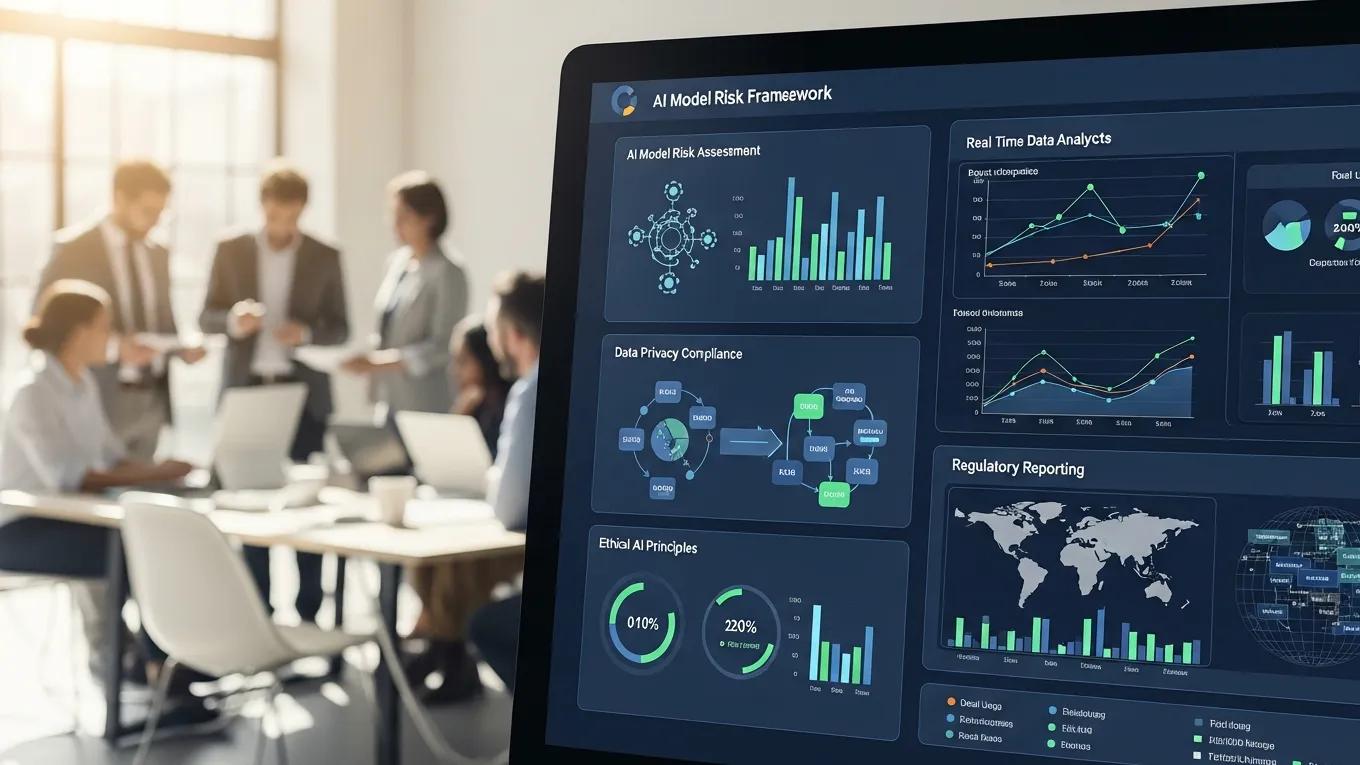
AI governance frameworks strengthen diagnostic control systems by establishing standards and procedures for the ethical and responsible deployment of AI. When governance is integrated with diagnostic controls, monitoring processes are not only operationally efficient but also structured to meet regulatory and compliance requirements.
Recent studies on AI accountability underscore the need for robust governance as system complexity increases.
AI Governance Frameworks for Enterprise Environments
Governance and accountability frameworks for artificial intelligence (AI) agents have become critical enablers for the responsible, ethical, and trustworthy deployment of autonomous and semi-autonomous systems across healthcare, finance, public administration, education, and enterprise environments. As AI agents increasingly perform complex decision-making, interact with external systems, and execute multi-step workflows, traditional governance models designed for static software systems are no longer sufficient.
Governance and Accountability Frameworks for AI Agents, 2025
The intersection of AI governance and diagnostic controls centers on transparency, accountability, and risk management. Organizations that implement governance frameworks can more effectively control AI-related risks, which supports enhanced decision quality and performance outcomes.
Which Performance Monitoring Tools Enhance Diagnostic Control Systems?
Several monitoring tools augment the capabilities of diagnostic control systems. These include:
- Business Intelligence Software: Provides data visualization and reporting capabilities, enabling organizations to analyze performance metrics effectively.
- Predictive Analytics Tools: Utilize historical data to forecast future performance trends, helping organizations make informed decisions.
- Workflow Automation Solutions: Streamline operational processes, reducing inefficiencies and improving overall performance.
Utilizing these tools enables organizations to optimize diagnostic control processes and align operational performance more closely with strategic objectives.
What Are Best Practices for Implementing Enterprise Risk Management Systems with Diagnostic Controls?
Effective implementation of enterprise risk management with diagnostic controls requires structured planning and disciplined execution. Consider the following best practices:
- Integration with Existing Systems: Ensure that diagnostic controls are compatible with current operational processes and technologies to facilitate seamless data flow.
- User Training Importance: Provide comprehensive training for employees to ensure they understand how to utilize diagnostic control systems effectively.
- Continuous Improvement Strategies: Establish a culture of continuous improvement by regularly reviewing and updating diagnostic controls based on performance feedback.
Dr. George Dagliyan provides consulting services to support organizations in applying these practices and to ensure diagnostic control systems remain effective and sustainable.
How Does Digital Transformation Monitoring Impact Diagnostic Control Systems?
Digital transformation enhances diagnostic control capabilities by enabling advanced data analytics and machine learning models that improve monitoring accuracy and operational efficiency. These technologies increase the fidelity of performance data and strengthen decision support.
Integration of digital tools also facilitates more sophisticated monitoring techniques and faster response to operational changes. Consequently, organizations can preserve competitive positioning in dynamic market conditions.
Leveraging Diagnostic Controls for Continuous Improvement in Digital Initiatives
To realize the value of digital initiatives, organizations must apply diagnostic controls deliberately. AI-enabled diagnostic controls deliver measurable operational insights that identify improvement opportunities. Predictive analytics support anticipatory strategies to address risks and opportunities.
Interactive dashboards that visualize performance metrics enable stakeholders to monitor key performance indicators in real time and to execute timely interventions and course corrections.
What Are Emerging Trends and Future Directions in Diagnostic Control Systems?

Emerging trends include continued advancement of AI technologies and an increased emphasis on data privacy and security. Organizations are adopting AI-enabled operational architectures that extend the analytical and monitoring capabilities of diagnostic controls.
Case studies documenting the operational and performance impacts of these systems are becoming more common and provide empirical evidence to guide implementation decisions. Monitoring these developments supports informed strategic planning and competitive sustainment.
The table summarizes how selected strategies enhance diagnostic control effectiveness and contribute to improved enterprise performance.
Diagnostic control systems constitute a core capability for effective enterprise risk management. Understanding their functions, mechanisms, and implementation practices enables organizations to improve performance and reduce exposure to risk. As digital transformation proceeds, tracking emerging trends will inform future strategic decisions.
Frequently Asked Questions
What are the key components of a diagnostic control system?
A diagnostic control system typically comprises data collection mechanisms, defined performance metrics, feedback loops, and reporting tools. These components operate together to monitor performance against strategic objectives. Data collection may draw on operational systems and structured employee inputs. Metrics establish objective criteria for success. Feedback loops deliver timely information to management. Reporting tools present data visually to facilitate trend analysis and identification of improvement areas.
How can organizations ensure the effectiveness of their diagnostic control systems?
Organizations should prioritize system integration, structured user training, and ongoing improvement processes. Ensure compatibility with existing technologies to support reliable data flow. Implement comprehensive training programs to secure effective use by personnel. Maintain scheduled reviews to update diagnostic controls in response to performance feedback and changing strategic priorities.
What challenges might organizations face when implementing diagnostic control systems?
Typical implementation challenges include resistance to change, deficiencies in data quality, and difficulties integrating with legacy systems. Resistance may stem from perceived complexity or uncertainty. Inaccurate or incomplete data can produce misleading conclusions. Technical integration requires deliberate planning, testing, and resource allocation. Proactive mitigation of these issues is necessary to achieve successful deployment.
How do predictive analytics enhance diagnostic control systems?
Predictive analytics enable forecasting of performance trends and early detection of potential issues. By analyzing historical datasets, predictive models identify patterns and correlations that inform strategic decisions. This capability permits organizations to implement risk mitigation and opportunity-capture strategies, transitioning management from reactive responses to a forward-looking posture.
What role does data privacy play in diagnostic control systems?
Data privacy is a central consideration given the reliance on personal and operational data. Compliance with regulations such as GDPR and CCPA is required to limit legal exposure and preserve stakeholder trust. Organizations must implement comprehensive data governance frameworks that specify collection, storage, access, and usage policies, and deploy appropriate security controls to protect sensitive information.
How can organizations leverage AI in their diagnostic control systems?
Organizations can deploy AI to enhance data analysis, strengthen decision support, and automate routine processes. AI can process large volumes of data rapidly to surface patterns and anomalies not readily apparent through manual methods, enabling real-time monitoring and more accurate forecasting. Automation of repetitive tasks frees personnel for higher-value activities. Integrating AI produces more responsive diagnostic controls that adapt to evolving business conditions.
Conclusion
Diagnostic control systems are critical for strengthening enterprise risk management by providing timely operational insights and supporting continuous improvement. Integration of technologies such as AI and predictive analytics enables proactive identification of inefficiencies and supports aligned decision making. Implementing these systems mitigates risk and aligns operational performance with strategic objectives. Our consulting services can assist organizations in evaluating and optimizing their diagnostic control systems.