


Comprehensive Directory of Vendors and Tools for AI Ops Platforms and Enterprise Solutions
AI Ops platforms enable enterprises to improve operational efficiency and advance digital transformation. This directory catalogs vendors and tools focused on AI Ops, detailing capabilities for managing complex IT environments. It describes core platform functionalities, identifies leading vendors, and outlines implementation best practices. Given the demand for operational innovation, understanding AI Ops’ role in enterprise strategy is necessary. The guide defines AI Ops platforms, categorizes vendors, and addresses AI governance and risk management.
What Are AI Ops Platforms and Their Role in Enterprise Operations?
AI Ops platforms apply artificial intelligence to automate and optimize IT operations within complex infrastructures. They employ machine learning to process large datasets and surface actionable anomalies for proactive remediation. Key outcomes include streamlined operations, reduced downtime, and improved operational efficiency—capabilities that support enterprise digital transformation.
Defining AI Operations Tools and Their Core Capabilities
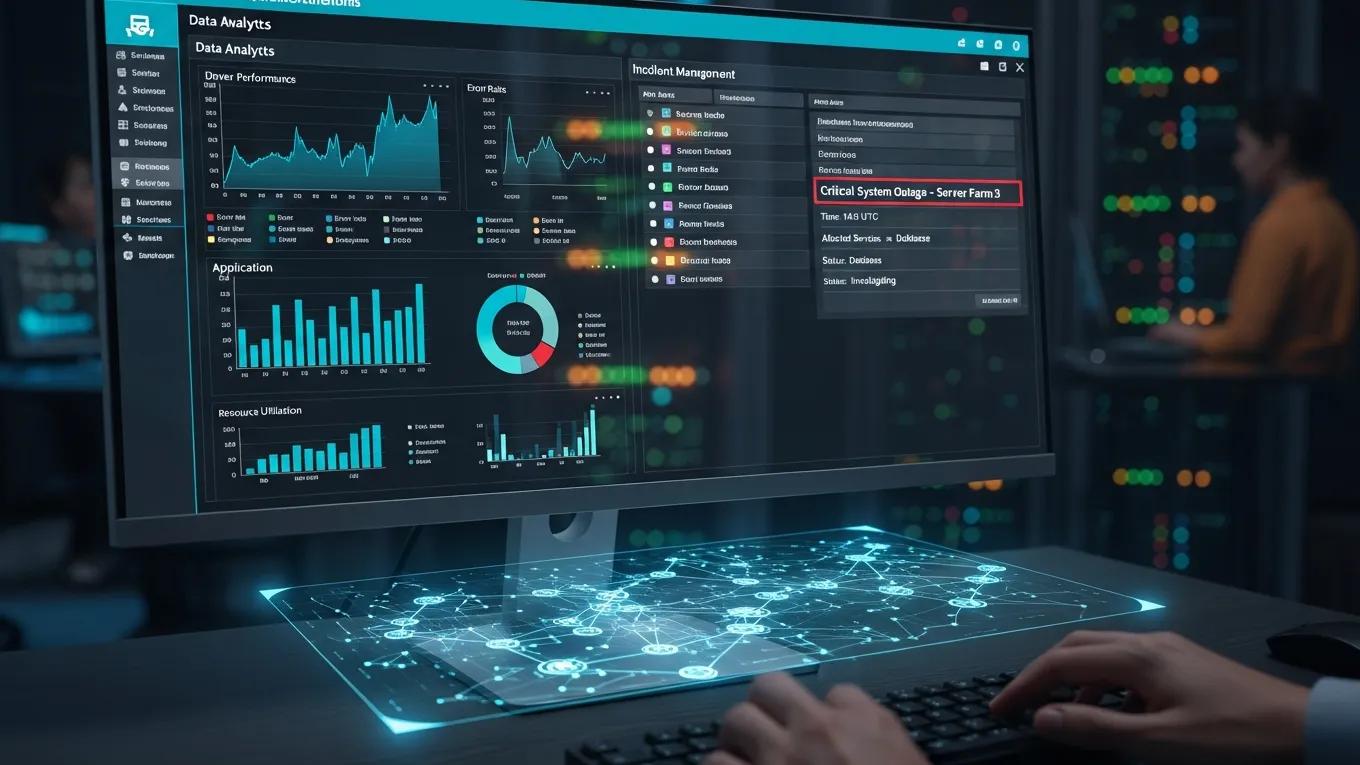
AI operations tools provide a set of functions to automate IT processes. Principal capabilities include:
- Data Analysis: AI Ops tools analyze data from various sources to provide insights into system performance and potential issues.
- Incident Management: These tools automate the detection and resolution of incidents, minimizing manual intervention and response times.
- Predictive Analytics: By leveraging historical data, AI Ops platforms can predict future incidents and performance issues, allowing for proactive management.
Collectively, these capabilities increase operational resilience and support adaptation to evolving business requirements.
Studies on design and implementation further underscore AI Ops’ role in streamlining incident management processes.
AIOps for Incident Management: Design & Implementation
Study examines use of AIOps to standardize the incident management process, emphasizing design and implementation considerations.
Aiops solutions for incident management: Technical guidelines and a comprehensive literature review, Y Remil, 2024
How AI Ops Platforms Support Digital Transformation and Risk Management
AI Ops platforms support digital transformation by supplying tools to manage and optimize IT environments. They facilitate:
- Enhanced Decision-Making: By providing real-time insights, AI Ops tools empower decision-makers to make informed choices that align with business objectives.
- Risk Mitigation: These platforms help identify potential risks and vulnerabilities within IT systems, allowing organizations to implement strategies to mitigate them effectively.
- Operational Efficiency: Automation of routine tasks frees up IT staff to focus on strategic initiatives, driving innovation and growth.
Integrating AI Ops into enterprise operations enhances efficiency and reinforces risk management frameworks.
Which Leading Vendors Provide AI Ops Platforms and Enterprise AI Solutions?
The AI Ops market comprises multiple vendors offering distinct solutions tailored to organizational requirements. Evaluating vendor offerings is essential for effective implementation.
Comprehensive AI Ops Vendor Directory with Categorized Listings
This directory serves as an initial reference for organizations evaluating AI Ops solutions that match their operational requirements.
How to Compare AI Ops Platforms: Features, Integration, and Pricing Models
Enterprises evaluating AI Ops platforms should assess the following factors:
- Features: Assess the core functionalities offered by each platform, such as data analysis, incident management, and predictive capabilities.
- Integration: Determine how well the platform integrates with existing IT systems and tools, ensuring seamless operations.
- Pricing Models: Understand the pricing structures of different vendors, including subscription-based models and one-time fees.
Comparing these aspects enables enterprises to select platforms aligned with operational objectives.
What Are Best Practices for AI Governance and Risk Management in AI Ops?
Establishing AI governance and risk management frameworks is essential for organizations deploying AI Ops. Such frameworks promote regulatory compliance and mitigate risks associated with AI deployments.
Implementing AI Governance Frameworks for Enterprise Compliance

A robust AI governance framework includes the following elements:
- Defining Policies: Organizations should create clear policies that outline the ethical use of AI technologies and data management practices.
- Monitoring Compliance: Regular audits and assessments should be conducted to ensure adherence to established policies and regulations.
- Stakeholder Engagement: Involving stakeholders in the governance process fosters transparency and accountability.
These measures assist organizations in managing governance complexity and maintaining conformance with industry standards.
Risk Management AI Software: Tools and Strategies for Operational Resilience
To improve operational resilience, organizations may employ the following risk management tools and strategies:
- Risk Assessment Tools: These tools help identify vulnerabilities within IT systems and assess potential impacts.
- Incident Response Plans: Developing comprehensive incident response plans ensures that organizations can react swiftly to potential threats.
- Continuous Monitoring: Implementing continuous monitoring solutions allows organizations to detect and respond to risks in real-time.
Adopting these strategies strengthens risk management capabilities and protects operational continuity.
How Does AI Ops Automation Enhance Enterprise Performance and Monitoring?
AI Ops automation improves enterprise performance by streamlining processes and enhancing monitoring functions. Automation enables more efficient operations and faster issue response.
AI Ops Automation Tools: Features and Benefits for Operational Efficiency
AI Ops automation tools provide features that increase operational efficiency:
- Automated Incident Detection: These tools can automatically identify and escalate incidents, reducing response times.
- Self-Healing Capabilities: Some platforms can automatically resolve common issues without human intervention, minimizing downtime.
- Resource Optimization: Automation helps optimize resource allocation, ensuring that IT teams focus on high-priority tasks.
These features yield improved operational performance and lower operational costs.
Recent research highlights AI-driven automation—including self-healing and auto-scaling—as transformational for cloud operational efficiency and cost-effectiveness.
AI-Driven Automation for Cloud Operations
Research indicates that AI-driven infrastructure automation, through self-healing and auto-scaling capabilities, enhances reliability, efficiency, and cost-effectiveness in cloud environments. Manual management approaches face challenges addressing unanticipated workloads, increased security threats, and operational failures as cloud systems grow in complexity. Automating responses to system failures, resource fluctuations, and performance constraints has made AI and machine learning integral to cloud operations.
AI-driven infrastructure automation: Leveraging AI and ML for self-healing and auto-scaling cloud environments, AAM Syed, 2024
Measuring Enterprise AI Performance Metrics and Outcomes
To assess AI Ops effectiveness, organizations should monitor key performance metrics, including:
- Incident Response Time: Measuring how quickly incidents are resolved can indicate the efficiency of AI Ops tools.
- System Uptime: Monitoring system uptime helps assess the reliability of IT operations.
- Cost Savings: Analyzing cost reductions associated with automation can demonstrate the financial impact of AI Ops.
Monitoring these metrics provides insights into AI Ops performance and identifies opportunities for improvement.
What Are Common Questions About Choosing and Using AI Ops Tools?
Organizations evaluating AI Ops adoption frequently raise questions about selection and implementation.
Which AI Ops Platforms Are Best Suited for Different Enterprise Needs?
Enterprise requirements for AI Ops platforms vary. Key considerations include:
- Size of the Organization: Larger enterprises may require more robust solutions with advanced features, while smaller organizations might benefit from simpler tools.
- Industry-Specific Requirements: Certain industries may have unique compliance and operational needs that specific AI Ops platforms can address.
- Budget Constraints: Organizations should evaluate their budget and choose platforms that offer the best value for their investment.
Understanding these factors enables enterprises to choose platforms aligned with their operational and regulatory requirements.
How to Integrate AI Ops Tools Within Existing Enterprise Systems?
Integration of AI Ops tools into existing systems requires the following best practices:
- Assess Compatibility: Ensure that the chosen AI Ops platform is compatible with current IT infrastructure and tools.
- Plan for Change Management: Develop a change management strategy to facilitate the transition to new systems and processes.
- Provide Training: Offering training for IT staff on the new tools will enhance adoption and effectiveness.
These practices support a smooth integration and maximize the benefits of AI Ops deployments.
Frequently Asked Questions
What are the key benefits of implementing AI Ops in an organization?
AI Ops adoption delivers enhanced operational efficiency, reduced downtime, and improved incident management. Automation of routine tasks and predictive analytics allow IT teams to concentrate on strategic work. Real-time insights support informed decision-making and advance digital transformation. AI Ops also contributes to risk reduction by enabling proactive identification of system vulnerabilities.
How can organizations ensure successful adoption of AI Ops tools?
Successful adoption requires a strategic program with stakeholder engagement, comprehensive training, and clear communication. Engage stakeholders early to secure buy-in and address concerns. Provide targeted training for IT personnel to ensure effective use. Define explicit goals and measurable metrics to monitor adoption and guide iterative improvements.
What challenges might organizations face when implementing AI Ops?
Implementation challenges include resistance to change, integration complexity, and data quality issues. Effective change management mitigates user resistance. Ensure integration planning addresses compatibility with existing infrastructure. Maintain data governance to prevent inaccurate or incomplete data from degrading AI performance.
How do AI Ops platforms enhance incident management processes?
AI Ops enhance incident management by automating detection, analysis, and remediation. Machine learning identifies patterns and anomalies to accelerate response. Automated resolution reduces manual intervention and downtime. Analytics enable prioritization of incidents by impact to focus resources on critical events.
What role does data quality play in the effectiveness of AI Ops?
Data quality is fundamental to AI Ops effectiveness. Accurate, complete, and timely data enable reliable analysis and actionable outputs. Poor data quality yields incorrect predictions and ineffective incident responses. Implement data governance, cleansing, and validation processes to ensure input integrity.
How can organizations measure the success of their AI Ops initiatives?
Measure AI Ops success via key performance indicators such as incident response time, system uptime, and cost savings. Track incident resolution speed to evaluate operational efficiency. Monitor uptime to assess reliability. Quantify cost reductions from automation to determine financial impact. Regular KPI reviews reveal improvement areas and inform optimization.
Conclusion
AI Ops platforms enhance operational efficiency and advance enterprise digital transformation. By automating incident management and supplying real-time insights, they enable informed decision-making and risk mitigation. Evaluating vendor offerings supports selection of solutions tailored to organizational requirements. Use this directory to inform procurement and optimize IT operations.