


Finding Balance Between Innovation and Governance: AI Governance Frameworks and Enterprise Risk Management Strategies
Organizations must reconcile innovation with governance, particularly in artificial intelligence where substantial transformative benefits coexist with material operational, legal, and ethical risks. This article examines core principles of AI governance frameworks and enterprise risk management strategies to inform organizational decision making. It identifies governance mechanisms, compliance models that enable controlled innovation, and operational best practices for aligning innovation with governance standards. The intent is to enable enterprises to align digital transformation initiatives with governance requirements to improve performance and compliance.
Definitions:
AI governance frameworks are structured guidelines and operational practices for managing the ethical and responsible development, deployment, and use of AI technologies. They aim to ensure alignment with legal, ethical, and societal requirements. Enterprise risk management comprises the processes and methodologies used to identify, assess, and mitigate risks that may impede achievement of organizational objectives. Together, these disciplines provide the foundation for balancing innovation with governance.
What Are the Core Principles of AI Governance Frameworks?
The core principles are trust, institutional governance, risk assessment and management, and compliance with ethical standards. Trust is established through transparency and accountability to maintain stakeholder confidence. Institutional governance defines clear roles and responsibilities for AI oversight. Risk assessment identifies potential threats associated with AI deployment and informs mitigation activities. Compliance with ethical standards ensures AI development and use respect human rights and societal values.
How Do AI Governance Frameworks Mitigate Enterprise Risks?
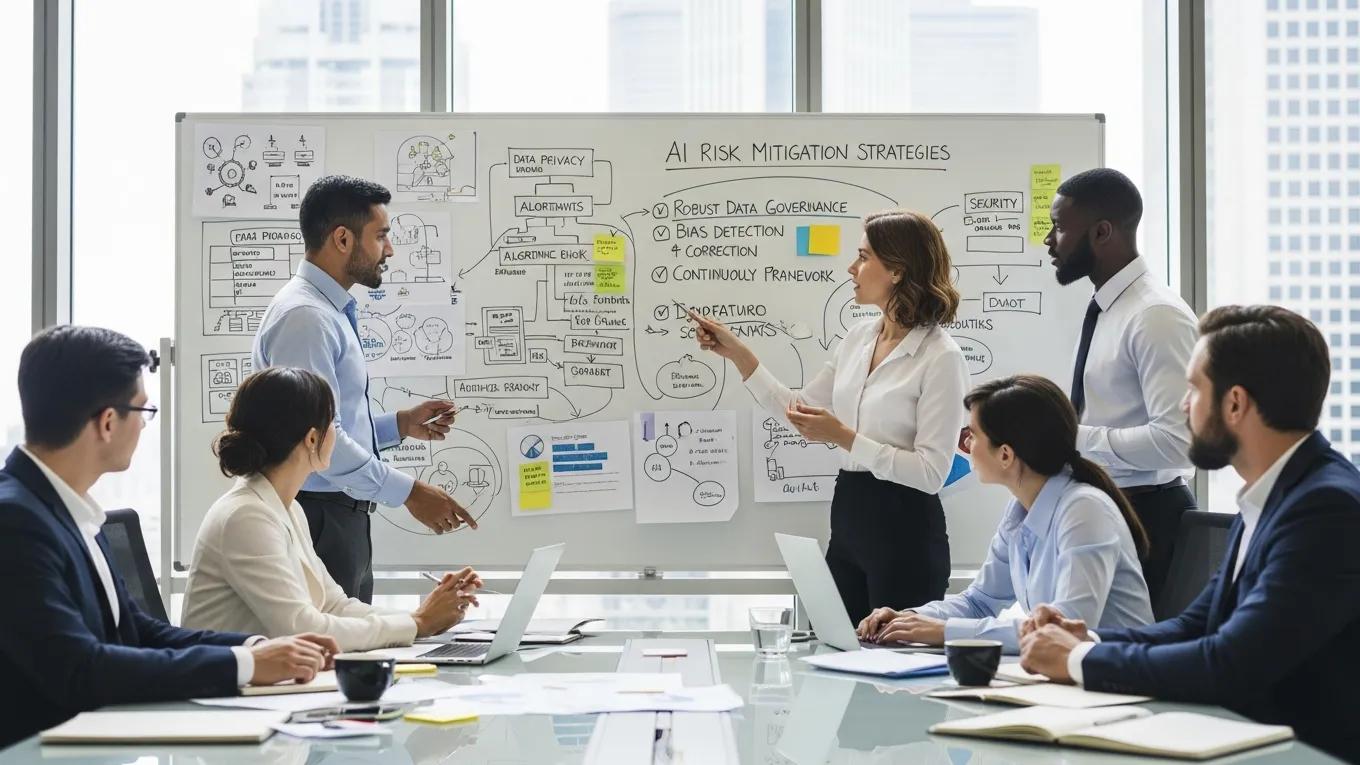
AI governance frameworks mitigate enterprise risks by establishing trust, implementing systematic risk management, and promoting organizational engagement. Transparency and accountability increase stakeholder confidence and facilitate technology adoption. Risk management activities, including audits and assessments, identify vulnerabilities in AI systems and support remediation. Engaging employees and stakeholders on AI ethics and governance cultivates institutional awareness and accountability.
Which Compliance Models Support Effective Innovation Control?
Effective innovation control is supported by compliance models such as data privacy regulations and industry-specific standards. These frameworks ensure that innovative practices conform to legal and ethical requirements. For example, compliance with the General Data Protection Regulation (GDPR) protects consumer data and reinforces organizational credibility. Adherence to these compliance models enables innovation while reducing legal and reputational exposure.
How Can Enterprises Manage Innovation While Ensuring Governance Compliance?
Enterprises manage innovation within governance by implementing comprehensive frameworks, engaging stakeholders, and continuously monitoring and adjusting strategies. A governance framework should document procedures and policies for oversight of innovation. Inclusive stakeholder engagement—employees, customers, and relevant functions—ensures diverse perspectives inform governance. Ongoing monitoring and iterative adaptation enable timely responses to emerging risks and opportunities.
Dr. George Dagliyan, an expert in artificial intelligence governance, provides tailored consulting solutions to assist enterprises in balancing innovation with governance. His services concentrate on AI adoption frameworks and enterprise performance strategy, equipping organizations with methodologies to address the complexities of digital transformation.
What Are Best Practices for Enterprise Innovation Management?
Best practices for enterprise innovation management include establishing clear policies, conducting regular risk assessments, and fostering a supportive culture for innovation. Policies define expectations and procedures for innovative activities. Periodic risk assessments identify challenges and inform mitigation actions. A culture that encourages idea generation and disciplined execution supports continuous improvement and organizational adaptability.
How Does Innovation Compliance Influence Digital Transformation Strategy?
Innovation compliance shapes digital transformation by defining permissible practices and influencing project scope and timing. Integrating compliance into transformation planning ensures innovations meet regulatory and ethical criteria, strengthening stakeholder trust and increasing the probability of successful implementation.
What Risk Management Strategies Are Essential for AI Adoption in Enterprises?
Essential risk management strategies for AI adoption include comprehensive risk assessments, formalized policies, and continuous monitoring mechanisms. Risk assessments evaluate vulnerabilities associated with AI deployments and inform governance decisions. Policies establish standards for responsible AI use. Continuous monitoring detects emergent risks and supports timely mitigation and strategy adjustment.
How Is AI Risk Assessment Integrated into Governance Frameworks?
AI risk assessment is integrated through defined assessment processes and a commitment to continuous improvement. Organizations should schedule regular evaluations of AI-related risks and ensure assessment outputs inform governance controls. Continuous refinement of methodologies and practices should follow lessons learned and evolving best practices.
What Are Emerging Trends in AI Risk Mitigation for 2025-2026?
Emerging trends for 2025–2026 include the development of additional compliance models and increased adoption of enabling technologies. As reliance on AI grows, regulatory frameworks are expected to expand. Concurrently, advancements in data analytics and machine learning will improve capabilities to identify and mitigate risks associated with AI deployment.
How Does Digital Transformation Strategy Affect the Balance Between Innovation and Governance?
Digital transformation strategy affects the balance by embedding advanced systems and improving operational efficiency. Prioritizing transformation enables organizations to automate processes, enhance decision support, and strengthen compliance controls. Alignment between transformation initiatives and governance frameworks ensures innovations deliver value while meeting governance requirements.
What Role Do Enterprise Systems Play in Innovation Control?
Enterprise systems provide the infrastructure required to manage and monitor innovative practices. They enable tracking of performance metrics, assessment of compliance against governance requirements, and facilitation of stakeholder communication. Effective utilization of enterprise systems enhances control over innovation and supports alignment with governance standards.
How Can Organizations Align Digital Transformation with AI Governance?
Organizations can align digital transformation with AI governance by establishing comprehensive governance frameworks and integrating risk management practices into digital initiatives. Governance frameworks should define oversight structures for AI assets. Embedding risk management in project lifecycles ensures proactive identification and mitigation of governance issues. Collaboration between transformation teams and governance stakeholders produces coordinated implementation.
Which Innovation Control Models Optimize Enterprise Performance and Compliance?

Innovation control models that optimize enterprise performance and compliance include the Dagliyan Theory Framework and diagnostic control systems. The Dagliyan Theory Framework emphasizes alignment between innovation initiatives, organizational objectives, and governance requirements. Diagnostic control systems provide mechanisms to monitor performance and compliance, supporting informed decisions regarding innovation strategy.
How Do Innovation Oversight Mechanisms Enhance Risk Management?
Innovation oversight mechanisms enhance risk management by establishing clear governance structures and instituting continuous monitoring practices. These mechanisms facilitate early identification and remediation of risks associated with innovative activities. Reinforcing accountability and transparency strengthens the organization’s overall risk management capability.
What Case Studies Demonstrate Successful Innovation Governance?
Case studies that demonstrate successful innovation governance present real-world examples of organizations that have balanced innovation with governance. These examples illustrate practical best practices, encountered challenges, and lessons learned. Systematic analysis of such cases yields actionable insights for organizations implementing governance frameworks.
Frequently Asked Questions
What are the key challenges organizations face in AI governance?
Organizations face key challenges including compliance with rapidly evolving regulations, management of ethical considerations, and ensuring transparency. Integrating AI governance within existing structures requires coordination across departments. Balancing innovation objectives with risk mitigation can create internal tensions and resistance to change. Addressing these challenges is necessary for effective governance and sustainable innovation.
How can organizations measure the effectiveness of their AI governance frameworks?
Measuring effectiveness involves evaluating key performance indicators such as compliance rates, stakeholder satisfaction, and frequency of risk incidents. Regular audits and assessments gauge adherence to governance policies and identify improvement areas. Qualitative feedback from employees and stakeholders complements quantitative metrics. Continuous monitoring of these indicators enables iterative refinement of governance frameworks.
What role does employee training play in AI governance?
Employee training is essential to operationalize AI governance. Training programs should cover ethical AI use, compliance obligations, and risk management procedures. Building staff competence ensures consistent application of governance controls. Ongoing training maintains awareness of regulatory developments and evolving best practices.
How can organizations ensure stakeholder engagement in AI governance?
Organizations ensure stakeholder engagement by involving representatives in governance decision making and maintaining transparent communication channels. Regular meetings, workshops, and structured feedback mechanisms allow stakeholders to raise concerns and contribute input. Cross-functional teams with appropriate representation improve collaboration and ensure diverse perspectives inform governance.
What are the implications of non-compliance with AI governance standards?
Non-compliance can produce significant legal, financial, and reputational consequences. Legal outcomes may include fines and sanctions, while financial effects can arise from lost opportunities and increased operational costs. Reputational damage undermines stakeholder trust and customer loyalty. Continuous compliance monitoring and prompt remediation are required to mitigate these risks.
How do cultural factors influence AI governance in organizations?
Cultural factors materially influence AI governance. A culture that prioritizes transparency, accountability, and ethical conduct supports effective governance adoption. Conversely, resistance to change impedes framework implementation. Cultivating open dialogue about AI risks and ethics empowers employees to assume governance responsibilities and aligns organizational behavior with governance objectives.
Conclusion
Balancing innovation and governance is essential for organizations deploying AI technologies. Implementing robust AI governance frameworks and enterprise risk management strategies strengthens compliance while enabling controlled innovation. A clear understanding of these principles supports informed decision making that drives sustainable growth. Discover how our expert consulting services can help you align your digital transformation with effective governance today.