


How AI Interacts with Cybersecurity: Comprehensive Insights into AI Governance, Risk Management, and Threat Detection
Artificial Intelligence (AI) is reshaping the cybersecurity domain by enhancing threat detection, risk management, and governance constructs. As organizations increase reliance on digital infrastructure, precise understanding of AI–cybersecurity interactions becomes a strategic requirement. This article examines the principal interactions, mechanisms that strengthen security controls, and the operational implications of adversarial machine learning. It provides detailed coverage of AI governance frameworks, enterprise integration practices, and the regulatory and ethical considerations that influence deployments, enabling organizations to manage AI-related cybersecurity complexity.
What Are the Core Interactions Between Artificial Intelligence and Cybersecurity?
AI is central to contemporary cybersecurity operations, automating detection and response functions to improve overall security posture. Integrated AI solutions perform real-time analysis of large-scale telemetry to surface indicators of compromise and support mitigation workflows. This section defines AI and cybersecurity applications within enterprise contexts and outlines their operational interactions.
Defining AI and Cybersecurity in Enterprise Contexts
Artificial Intelligence denotes computational systems that emulate aspects of human cognition. In cybersecurity contexts, AI comprises technologies such as machine learning, natural language processing, and data analytics applied to threat detection, behavioral analysis, and incident response. Cybersecurity denotes the practices and controls that protect systems, networks, and applications from unauthorized access and malicious activity. The intersection is manifested in automated detection systems where algorithms identify anomalous patterns indicative of threats.
Overview of AI-Driven Cyber Threat Detection Mechanisms
AI-driven threat detection mechanisms apply statistical and algorithmic models to telemetry in order to identify potential breaches. Common implementations include anomaly detection—models that learn baseline behavior and flag deviations—and predictive analytics that infer probable threat trajectories from historical incident data. These capabilities reduce time-to-detection and narrow exposure windows; however, they introduce considerations such as data privacy constraints and the requirement for continuous model retraining and validation.
How Does Adversarial Machine Learning Impact Cybersecurity Risk?
Adversarial machine learning introduces distinct risks by targeting vulnerabilities within AI models. This section evaluates how adversarial techniques affect operational security and outlines mitigation approaches aligned with enterprise risk management.
Understanding Adversarial Attacks and Their Security Implications

Adversarial attacks manipulate input data to induce incorrect outputs from AI models, thereby compromising prediction integrity and decision pipelines. Such manipulations can target image classifiers, natural language processing models, and other model classes, potentially disrupting automated security controls. Identifying attack vectors and assessing their impact on model trustworthiness are prerequisites for designing resilient defenses.
Strategies for Mitigating Adversarial Risks in AI Systems
Mitigation strategies include adversarial training—incorporating adversarial examples during model development to improve robustness—and ensemble architectures that aggregate multiple model outputs to reduce single-model failure modes. Complementary measures encompass continuous monitoring, rigorous model validation, secure deployment practices, and incident response planning to address evolving adversarial techniques.
What Are Effective AI Governance Frameworks for Cybersecurity Risk Management?
Effective AI governance frameworks are essential for controlling cybersecurity risks associated with AI deployments. This section identifies governance components and discusses implementation considerations for enterprise security programs.
Components of AI Governance in Enterprise Security
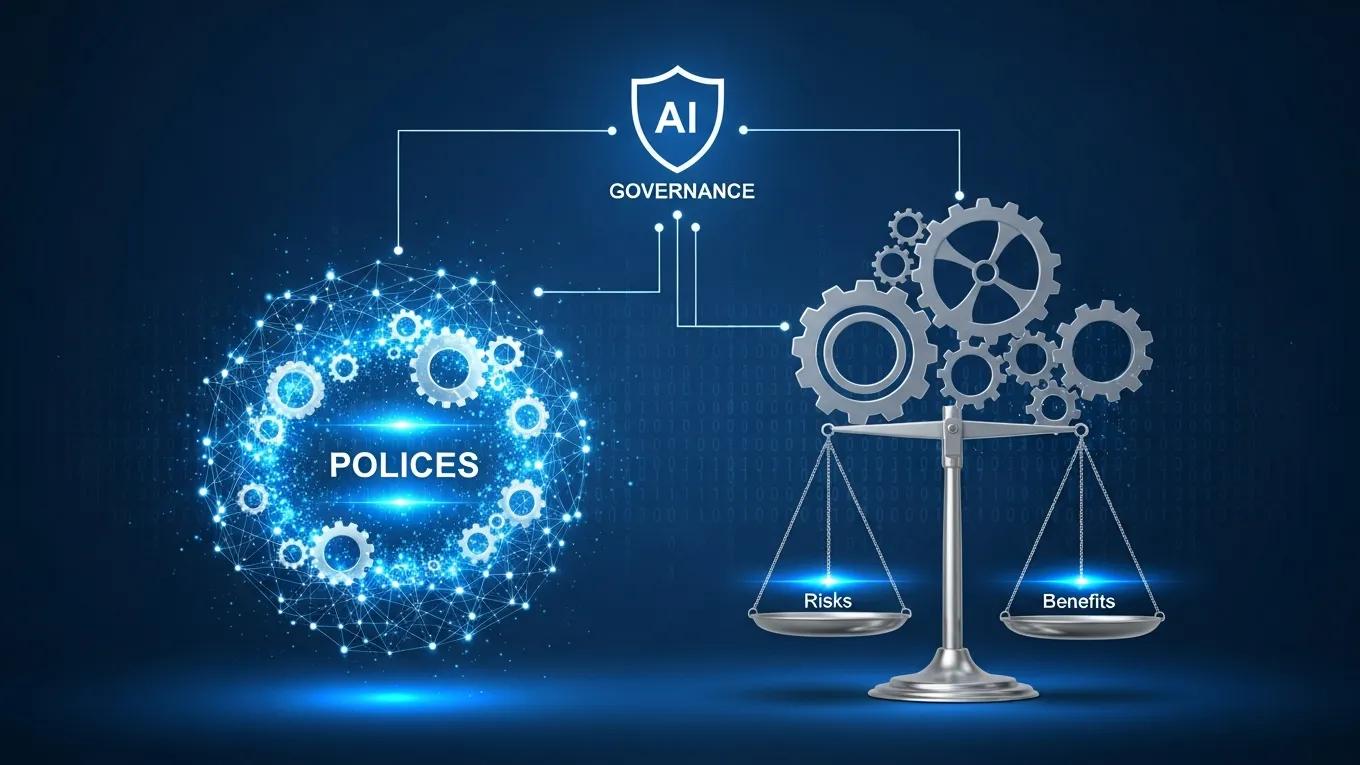
AI governance comprises policies, procedures, and technical standards that guide responsible AI use within cybersecurity operations. Core elements include risk assessment methodologies, defined accountability and escalation paths, and compliance controls. Organizations must assign clear roles and integrate AI governance with existing security frameworks to ensure consistent risk management across the enterprise.
Research underscores the need for adaptive governance approaches that account for dynamic threat environments and AI-specific risk profiles within enterprise security programs.
Adaptive AI Cybersecurity Governance for Enterprises
Rapid advances in AI, cloud computing, and Agile development have increased the complexity of enterprise cybersecurity governance. Established frameworks that assume static environments frequently do not address adaptive threats directed at AI-enabled systems. This paper proposes an Adaptive Cybersecurity Governance Framework (ACGF) to embed security-first principles into Agile and DevSecOps processes while incorporating AI-specific defensive controls.
Adaptive Cybersecurity Governance for AI-Driven Enterprises: A Security-First Agile Framework for 2026 and Beyond, 2026
Implementing AI Governance to Mitigate Cybersecurity Threats
Implementing AI governance requires a structured program that defines objectives, establishes oversight committees, and delivers targeted training for technical and operational staff. Organizations should measure governance effectiveness through regular audits, assessments, and relevant performance metrics. Documented accountability mechanisms and transparent processes increase resilience while enabling controlled adoption of AI capabilities.
How Are Enterprise Cybersecurity Solutions Enhanced by AI Integration?
Integration of AI into enterprise cybersecurity operations enhances detection and response capabilities at scale. This section examines the operational benefits of AI-driven automation and presents illustrative cases demonstrating measurable impact.
AI-Driven Automation and Threat Detection in Enterprise Systems
AI-driven automation accelerates threat detection and response by analyzing network telemetry, identifying anomalies, and initiating predefined response actions. Automation reduces mean time to detect and mean time to respond, which is critical in high-throughput environments where manual monitoring is infeasible. Properly governed AI implementations can improve incident metrics and reduce operational expenditure.
Empirical studies substantiate that adaptive AI-integrated frameworks enhance threat detection and operational resilience in cloud environments.
AI-Integrated Cybersecurity Frameworks for Threat Detection & Resilience
This study examines adaptive cybersecurity frameworks that integrate AI to improve threat detection, response, and resilience in cloud environments. The research highlights the roles of machine learning, behavioral analytics, and automated incident response in creating self-learning security systems capable of real-time adaptation. By evaluating existing models and proposing an adaptive framework, the work outlines how enterprises can strengthen security posture while maintaining operational efficiency.
Adaptive Cybersecurity Frameworks for Enterprise Systems Integrating Artificial Intelligence in Cloud Environments, 2026
Case Studies Demonstrating AI Impact on Cybersecurity Performance
Several organizations have integrated AI into cybersecurity with measurable performance improvements. For example, a financial institution implemented AI-driven threat detection that reduced false positives by 30%, enabling security teams to prioritize confirmed threats. A healthcare provider deployed AI monitoring for patient data access, materially improving compliance with data protection regulations. These cases demonstrate quantifiable benefits from AI integration when accompanied by appropriate controls.
What Regulatory and Ethical Considerations Influence AI in Cybersecurity?
Regulatory and ethical frameworks for AI in cybersecurity continue to evolve. This section identifies principal compliance requirements and the principal ethical challenges that organizations must address.
Compliance Requirements for AI Risk Management in Cybersecurity
Organizations must operate within a multifaceted regulatory landscape that includes data protection statutes, industry standards, and sector-specific guidance. Effective compliance frameworks ensure AI systems process personal and sensitive data according to legal requirements and maintain auditability for regulatory review. Regular training and governance updates are necessary to sustain compliance as regulations and technologies evolve.
Ethical Challenges and Best Practices in AI Security Deployment
AI deployment in security raises ethical issues such as algorithmic bias, transparency of decision logic, and potential misuse of automated capabilities. Best practices include periodic algorithmic audits to detect and mitigate bias, documentation of model decision processes to support auditability, and formal policies governing acceptable use. Prioritizing these practices supports stakeholder trust and improves operational outcomes.
What Future Trends and Innovations Will Shape AI and Cybersecurity Interaction?
Future interactions between AI and cybersecurity will be shaped by technological advances and shifts in governance. This section examines emergent technologies and anticipated developments that will influence security practice.
Emerging Technologies in AI-Enabled Cybersecurity
Emerging technologies—such as quantum computing, distributed ledger systems, and advanced machine learning techniques—will affect cryptographic resilience, data integrity, and behavioral analytics. Quantum capabilities have implications for current encryption algorithms; blockchain and related technologies can provide tamper-evident provenance for sensitive logs; and advanced ML methods will enable finer-grained anomaly detection. Organizations should monitor these developments to inform strategic planning.
Anticipated Developments in AI Governance and Risk Mitigation
Anticipated governance developments include the emergence of standardized guidelines for AI governance, greater collaboration between industry and regulatory bodies, and the integration of AI ethics into corporate governance structures. Organizations that proactively update policies and governance architectures will be better positioned to manage AI-related risks and to operationalize AI safely.
The table enumerates core AI governance components and their roles in managing cybersecurity risk.
Integration of AI into cybersecurity represents a structural change in defensive capabilities. By understanding AI–cybersecurity interactions, organizations can formulate strategies that leverage AI capabilities while addressing associated technical risks, compliance obligations, and ethical considerations.
Frequently Asked Questions
1. How can organizations ensure the ethical use of AI in cybersecurity?
Organizations should establish formal ethical guidelines, require transparent model documentation, and perform regular algorithmic audits to detect bias. Mandatory training and clear assignment of accountability for AI-driven decisions are essential to maintain ethical compliance and stakeholder confidence.
2. What role does continuous learning play in AI-driven cybersecurity?
Continuous learning enables models to incorporate new telemetry and threat indicators, preserving detection relevance and reducing model drift. Regular retraining, validation with recent incident data, and performance monitoring are necessary to maintain model accuracy over time.
3. What are the potential risks of relying solely on AI for cybersecurity?
Relying exclusively on AI introduces risks including missed contextual signals, vulnerability to adversarial manipulation, and undetected model degradation. A combined approach that pairs automated capabilities with human oversight and governance controls yields greater resilience.
4. How can organizations measure the effectiveness of their AI governance frameworks?
Effectiveness can be measured through audits, assessments, and performance metrics such as compliance rates, incident frequency, detection accuracy, and mean time to respond. Stakeholder feedback and periodic governance reviews should inform continuous improvement activities.
5. What emerging technologies should organizations watch for in AI cybersecurity?
Organizations should monitor quantum computing for its implications on cryptography, blockchain for secure provenance and integrity verification, and advances in machine learning that enhance detection and response automation. Strategic horizon scanning will support informed investment decisions.
6. How does AI improve incident response times in cybersecurity?
AI improves incident response times by automating analysis of high-volume network data and surfacing anomalies more quickly than manual processes. Faster detection enables earlier containment actions, reducing operational impact and supporting continuity objectives.
7. What are the implications of adversarial machine learning for AI in cybersecurity?
Adversarial machine learning undermines model reliability by exploiting input vulnerabilities, which can produce incorrect outputs and compromise security controls. Organizations should apply adversarial training, runtime monitoring, and secure model lifecycle practices to maintain trust in AI systems.
Conclusion
When implemented within structured governance and operational controls, AI enhances threat detection, risk management, and governance capabilities. Organizations that align AI adoption with ethical standards, regulatory requirements, and oversight mechanisms can realize measurable security improvements. Evaluate advanced AI capabilities against organizational objectives and incorporate governance, monitoring, and human oversight to sustain long-term effectiveness.