


Research Hub: Comprehensive AI Adoption and Innovation Diffusion Strategies for Enterprise Leaders
Artificial intelligence (AI) adoption is a material determinant of enterprise competitiveness within contemporary technology ecosystems. This article examines the mechanics of AI adoption and innovation diffusion and delivers evidence-informed strategies for enterprise leaders. It summarizes the determinants of adoption, the role of organizational readiness, and operational best practices for system integration. The content addresses challenges inherent in digital transformation and outlines strategic approaches for leveraging AI capability. Coverage includes projected AI adoption strategies for 2026, innovation-diffusion models, and current frameworks for AI governance and risk management.
Understanding Adoption Dynamics
Adoption outcomes reflect a combination of organizational culture, technological readiness, and external market forces. Trust dynamics and brand reputation materially affect stakeholder acceptance of AI solutions. Common inhibitors include concerns about workforce displacement and data privacy, which require targeted mitigation. Institutional facilitators—executive sponsorship, structured training, and governance mechanisms—are necessary to enable integration. A clearer understanding of these factors permits structured interventions that align technology adoption with organizational objectives.
Building Organizational Readiness

Organizational preparation for AI requires establishing a technology-capable culture and formal risk-management practices. Enterprises should create controlled environments for experimentation to evaluate AI use cases while limiting operational exposure. Leadership must articulate the strategic rationale for AI and allocate resources for skills development and infrastructure. These measures produce a reproducible readiness baseline that supports sustainable deployment of AI technologies.
Subsequent studies identify specific readiness criteria and organizational prerequisites that correlate with successful AI implementations.
Organizational Readiness Factors for AI Implementation
However, little is known about the necessary AI-specific requirements or readiness factors to ensure a successful organizational implementation of this technological innovation. Additionally, extant IS research has largely overlooked the possible strategic impact on processes, structures, and management of AI investments. Drawing on TOE framework, different factors are identified and then validated conducting 12 expert interviews with 14 interviewees regarding their applicability on the adoption process of artificial intelligence.
A new organizational chassis for artificial intelligence-exploring organizational readiness factors, L Pumplun, 2019
Leveraging Scalable Infrastructure
Scalable infrastructure is a prerequisite for enterprise-grade AI initiatives. Architectures must support high-volume data ingestion, model training workloads, and production inference at scale to sustain decision-support capabilities. Automation of routine processes and analytics-driven insights can improve operational efficiency and decision velocity. Capital allocation should prioritize modular systems and cloud-native or hybrid platforms that permit incremental scaling in response to business demand.
Facilitating Innovation Diffusion
Effective diffusion of innovation requires alignment of capital deployment with organizational priorities and active cultural engagement to stimulate creativity. Directing resources to projects with defined value propositions ensures focus on initiatives that generate measurable returns. Cross-functional collaboration accelerates knowledge transfer and adoption of proven practices. These interventions increase organizational agility and improve the rate at which AI-driven capabilities propagate across business units.
Best Practices for Integration
Successful integration of AI into legacy environments demands rigorous planning and phased execution. The following best practices summarize essential activities and controls.
- Continuous Communication and Training: Regular updates and training sessions help employees understand AI technologies and their applications.
- Monitoring and Evaluating AI Performance: Establishing metrics to assess AI effectiveness ensures that systems are meeting organizational goals.
- Adapting to New Technologies: Staying informed about emerging AI trends allows organizations to remain competitive and responsive to market changes.
Dr. George Dagliyan provides consulting and advisory services focused on responsible AI implementation, including AI governance and risk-management guidance. His advisory support can assist enterprises in operationalizing governance frameworks and aligning implementations with regulatory and ethical requirements.
What Are the Key Enterprise AI Adoption Strategies in 2026?
Key AI adoption strategies emerging for 2026 emphasize addressing data quality limitations and integration complexity as priority constraints. Governance trajectories will increasingly mandate transparency and ethical accountability in automated decision-making. Prioritizing these domains enables enterprises to manage implementation risk while realigning operational processes to capture value from AI deployments.
Comprehensive policy frameworks are required to assess enterprise AI readiness and to incentivize adoption practices that deliver sustainable business outcomes.
Enterprise AI Readiness & Adoption Policy Framework
This study aims to develop an information-analytical system to generate government policy recommendations that encourage artificial intelligence adoption (AIA) in enterprises, thereby supporting sustainable business outcomes. The insights derived enable the formulation of policy recommendations that promote AI adoption, fostering higher productivity, efficiency, and competitiveness in the national economy. The study’s originality lies in its comprehensive analytical framework, which identifies gaps in enterprise AI readiness and adoption, while creating political pressure for support schemes and mechanisms that ensure a smooth AI-driven transformation across all sectors of the country’s economic life.
Information-analytical system for evaluating artificial intelligence readiness and adoption in enterprises: a policy framework, M Skare, 2026
How Do Organizations Overcome AI Implementation Challenges?
Organizations commonly encounter resistance to change, skills shortages, and integration constraints during AI implementations. Mitigation approaches should include diagnostic assessments to identify specific barriers, targeted training programs to close skill gaps, and governance mechanisms to maintain strategic alignment. A combination of capability development, process redesign, and executive sponsorship is required to overcome systemic impediments to adoption.
- Identifying Common Challenges: Understanding specific obstacles allows organizations to tailor their approaches effectively.
- Strategies for Overcoming Barriers: Providing targeted training and resources can empower employees to embrace AI technologies.
- Importance of Leadership Support: Strong leadership commitment is crucial for driving AI initiatives and fostering a culture of innovation.
Which Innovation Diffusion Models Drive Digital Transformation in Enterprises?
Innovation-diffusion models serve as analytical tools to map adoption pathways and to identify determinants of uptake across organizational populations. Applying these models enables planners to sequence interventions, estimate adoption timelines, and align transformation programs with strategic objectives. The models support decision-making by clarifying adoption mechanisms and expected diffusion patterns.
An analytical innovation-diffusion framework is particularly applicable for evaluating enterprise digital-transformation use cases and implementation sequencing.
Innovation Diffusion for Enterprise Digital Transformation
The validated analytical framework for innovation diffusion was found to be useful in analyzing use cases on enterprise- and division-wide digital transformations. The five steps
Digital transformation of industrial firms: an innovation diffusion perspective, A Steiber, 2021
How Do Innovation Diffusion Theories Apply to Enterprise System Performance?
Diffusion theories link adoption behaviors to performance outcomes, enabling practitioners to identify implementation patterns that correlate with efficiency gains. Translating theoretical constructs into operational practices permits systematic identification of leverage points for process improvement. Case studies provide empirical evidence of how diffusion-aligned strategies have delivered performance improvements in comparable organizations.
What Are the Latest AI Governance Frameworks for Risk Management?
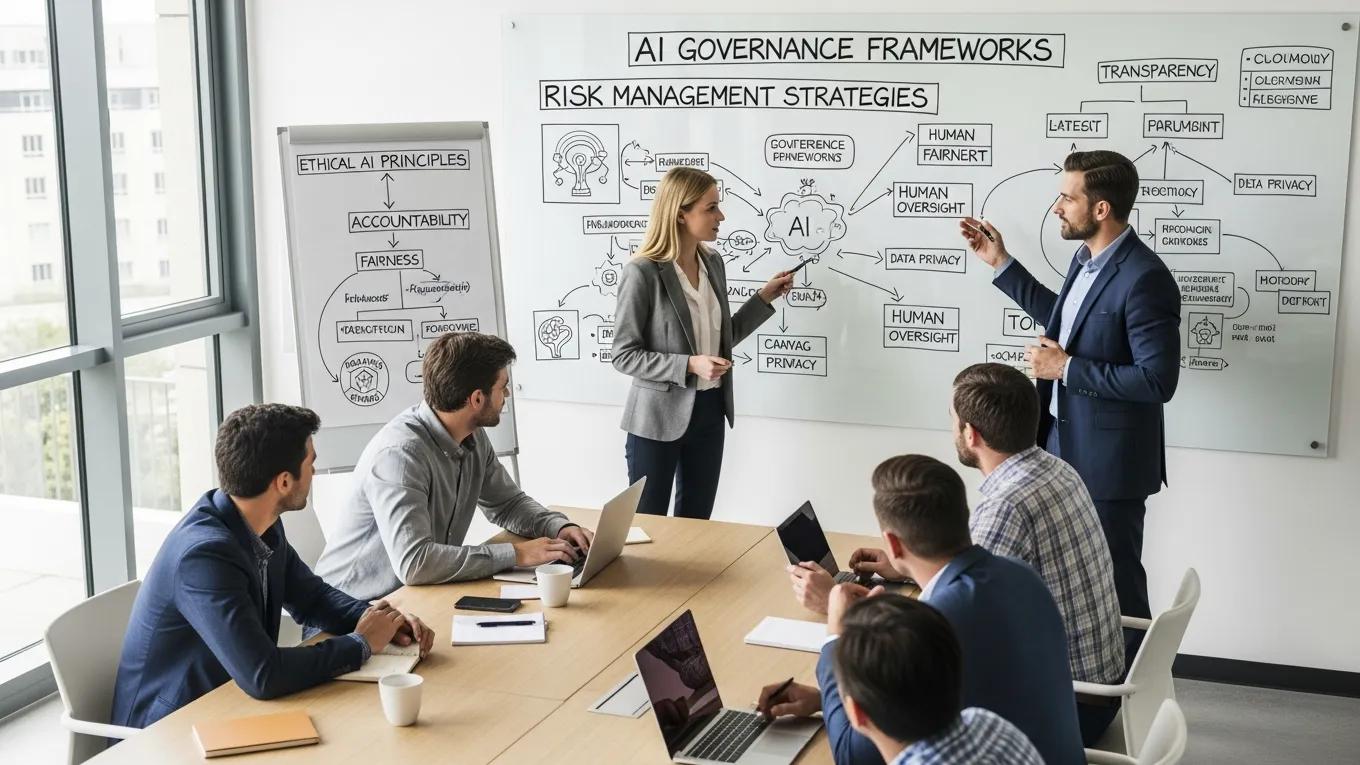
AI governance frameworks define controls, roles, and processes to manage model risk, data governance, and algorithmic accountability. Effective frameworks codify requirements for data provenance, model validation, and explainability to satisfy regulatory expectations and stakeholder scrutiny. Implementation of governance structures reduces operational exposure and supports consistent, auditable AI deployment practices.
How Do AI Risk Management Frameworks Mitigate Enterprise Risks?
Robust AI risk-management frameworks identify enterprise exposure across data, model, and operational dimensions and prescribe mitigation strategies. Effective deployments typically include comprehensive risk assessments, continuous monitoring, and governance reviews to validate framework performance. Documented case studies illustrate how these controls reduce incidence of failure and align AI systems with organizational risk tolerance.
- Identifying Enterprise Risks: Conducting thorough risk assessments helps organizations understand vulnerabilities.
- Framework Effectiveness: Evaluating the performance of risk management frameworks ensures they meet organizational needs.
- Case Studies of Successful Risk Management: Analyzing real-world examples provides insights into best practices and lessons learned.
How Does AI Adoption Impact Enterprise Digital Transformation Outcomes?
AI adoption materially influences digital-transformation outcomes through automation, predictive analytics, and enhanced decision support. Organizations that integrate AI with process redesign commonly report improvements in operational efficiency, customer experience, and innovation throughput. Quantifying these effects enables more accurate assessment of ROI and informed prioritization of subsequent investments.
What Metrics Measure Enterprise System Innovation and Performance?
Evaluation of AI initiatives should rely on objective key performance indicators (KPIs). Metrics such as return on investment (ROI), process cycle time reduction, and customer-satisfaction indices provide measurable indicators of effectiveness. Tracking the count and success rate of AI projects and benchmarking against industry standards enables continuous improvement and comparative performance assessment.
Which Consulting Services Support Responsible AI Implementation in Enterprises?
Consulting services provide expertise in governance design, risk assessment, change management, and technical implementation to support responsible AI deployment. Suppliers typically offer methodology, tooling, and advisory support to integrate ethical, legal, and technical controls into program delivery. Engaging specialized consultants accelerates capability transfer and reduces implementation risk.
How Does Dr George Dagliyan’s Research Inform AI Advisory Practices?
Dr. George Dagliyan’s research examines the intersection of AI adoption and innovation diffusion and generates empirical insights relevant to advisory practice. His work highlights governance considerations and responsible-practice requirements that inform advisory frameworks. Integrating these research findings into consulting engagements supports evidence-based strategy development that aligns with organisational objectives.
What Are Emerging Trends and Case Studies in AI Adoption and Innovation Diffusion?
Emerging trends emphasize ethical accountability, algorithmic transparency, and improvements in data quality as core enablers of adoption. Cross-sector case studies demonstrate practical applications and measurable outcomes of AI investments, informing replication and scaling strategies. Analysis of these trends provides a basis for strategic planning and risk-aware deployment.
How Do 2025-2026 Case Studies Illustrate Effective AI Governance?
Case studies from 2025–2026 document the application of governance frameworks to manage operational and ethical risks in deployed AI systems. Common lessons include the value of stakeholder engagement, iterative evaluation, and formalized review processes. Applying these lessons supports continuous governance improvement and sustained program performance.
Frequently Asked Questions
What are the common barriers to AI adoption in enterprises?
Frequent barriers include organizational resistance to change, insufficient technical expertise, and data-privacy and integration concerns. Workforce displacement anxiety can impede acceptance, while legacy systems complicate implementation. Addressing these issues requires targeted reskilling, integration roadmaps, and governance structures that align incentives and mitigate operational disruption.
How can organizations measure the success of their AI initiatives?
Organizations should monitor a set of relevant KPIs to evaluate AI program performance. Standard measures include ROI, customer-satisfaction metrics, process-efficiency gains, and project success rates. Routine benchmarking against industry standards and periodic program reviews support evidence-based adjustments to strategy and investment allocation.
What role does leadership play in AI adoption?
Leadership provides strategic direction, resource allocation, and accountability for AI initiatives. Executive sponsorship establishes priorities, enables cross-functional coordination, and signals organizational commitment. Leaders must ensure governance, funding for capability development, and mechanisms for performance oversight to drive successful integration.
What are the ethical considerations in AI governance?
Ethical governance requires transparency, accountability, and fairness in algorithmic decision-making. Organizations must identify and mitigate bias, maintain data privacy protections, and document decision processes to uphold stakeholder trust. Formal policies and oversight structures are necessary to operationalize ethical standards and ensure compliance.
How can enterprises foster a culture of innovation for AI adoption?
Enterprises should institutionalize experimentation, promote cross-disciplinary collaboration, and provide protected resources for pilot projects. Leadership communication of strategic priorities, targeted training programs, and recognition of validated innovations encourage participation. These practices increase organizational readiness and the velocity of scalable adoption.
What are the latest trends in AI adoption for enterprises?
Current trends include heightened emphasis on ethical AI practices, concerted efforts to improve data quality, and integration of AI with complementary technologies such as IoT and distributed ledgers. Organizations also prioritize transparent decision processes and invest in scalable infrastructure to support sustained AI operations. These trends inform planning for resilient, compliant AI implementations.
Conclusion
Adoption of AI and effective management of innovation diffusion are strategic imperatives for enterprises pursuing sustained competitiveness. A focus on organizational readiness, scalable infrastructure, and rigorous governance enables measurable efficiency gains and supports long-term growth. Organizations should evaluate these strategic areas and adopt proven practices for integration. For organizations requiring tailored support, consulting services are available to guide responsible AI implementation and governance.