

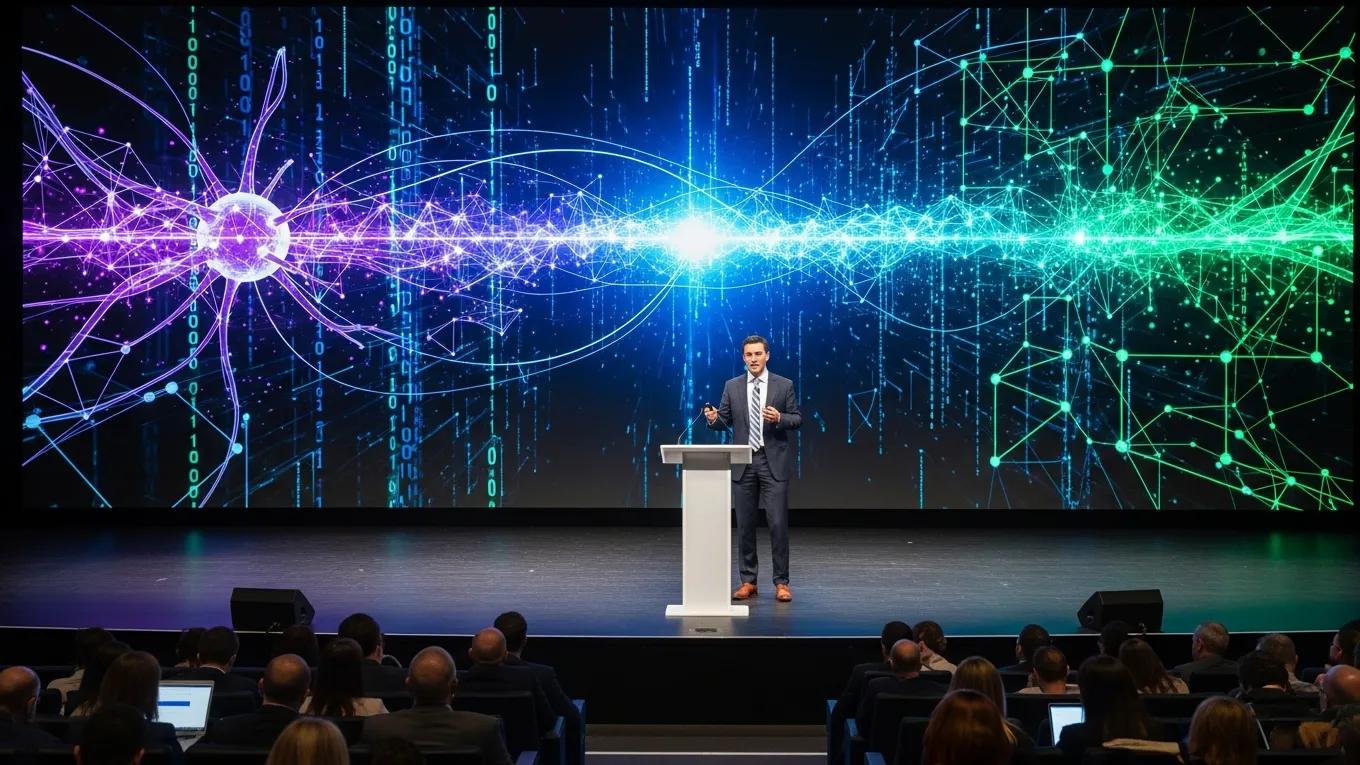
Executive Keynote Speaker AI Governance: Comprehensive Overview of Speaking, Media, and Keynote Services
Artificial intelligence (AI) is reshaping industries; effective governance is essential. This article describes the speaking, media, and keynote services provided by Dr. George Dagliyan, an expert in AI governance. It summarizes the principal components of AI governance services, outlines Dr. Dagliyan’s relevant expertise, and explains how those services support enterprise risk mitigation. The article also addresses advisory benefits, the integration of risk management, and procedures for engaging Dr. Dagliyan for speaking and advisory assignments.
Key Components of AI Governance Services
AI governance comprises services intended to ensure the responsible and effective deployment of AI technologies. Core elements include:
- Research Insights: Providing data-driven insights into AI trends and best practices.
- The Dagliyan Theory: A framework developed by Dr. Dagliyan that outlines effective governance strategies for AI.
- Speaking Engagements: Opportunities for organizations to learn directly from Dr. Dagliyan through keynote speeches and workshops.
Combined, these elements establish a structured foundation for enterprises implementing AI governance.
What Expertise Does Dr George Dagliyan Bring to AI Governance Keynote Speaking?

Dr. George Dagliyan is a recognized authority in AI governance with documented academic and research credentials. He holds a Doctorate in Business Administration from Pepperdine University and received the Top Paper Award at the Americas Conference on Information Systems (AMCIS) in 2022. His academic training and empirical research inform his keynote content and advisory practice.
How Does AI Governance Mitigate Enterprise Risk?
AI governance mitigates enterprise risk by defining governance structures, policies, and controls that guide ethical AI use. Robust frameworks enable organizations to identify risks—including algorithmic bias and data privacy exposures—and to implement controls that reduce compliance and reputational incidents. Empirical case studies indicate organizations with established governance report fewer compliance violations and reduced reputational impact.
What Are Dr Dagliyan’s Credentials in Enterprise Systems Innovation?
Dr. Dagliyan’s work focuses on technology adoption and its implications for organizational performance. His publications on the intersection of AI and enterprise systems are cited within academic discourse and support his role advising organizations on leveraging AI for operational innovation and competitive differentiation.
Which Executive Keynote Services Does Dr Dagliyan Offer for Digital Transformation Leadership?
Dr. Dagliyan provides executive keynote services tailored to digital transformation leadership. These services include:
- Keynote Speaking: Engaging presentations that inspire and educate audiences on AI governance and digital transformation.
- AI Adoption & Innovation Strategy: Guidance on how to effectively integrate AI into business processes to drive innovation.
These offerings equip executives with strategic frameworks and practical guidance required to manage AI-driven transformation.
Contemporary research corroborates the central role of strategic leadership in addressing ethical and innovation challenges during AI-driven digital transformation.
Strategic Leadership for Ethical AI Governance & Digital Transformation
This research argues that AI-driven digitalization requires advanced leadership competencies to manage disruptive innovation, ethical governance, and sustainable business strategy. It examines the capabilities necessary to adopt and integrate frontier technologies—artificial intelligence (AI), machine learning (ML), blockchain, and fintech—across the operational ecosystems of multinational corporations and small-to-medium-sized enterprises (SMEs).
Strategic leadership in AI-driven digital transformation: Ethical governance, innovation management, and sustainable practices for global enterprises and SMEs, 2025
What Topics Are Covered in AI Risk Management Keynotes?
In his AI risk management keynotes, Dr. Dagliyan addresses a range of topics, including:
- AI Risk Management Frameworks: Strategies for identifying and mitigating risks associated with AI technologies.
- Case Studies: Real-world examples of organizations that have successfully implemented AI governance frameworks.
- Best Practices: Recommendations for organizations looking to enhance their AI governance strategies.
Collectively, these topics provide a comprehensive view of operational risks and governance opportunities associated with AI implementation.
Further research highlights the integration of AI into project management and its influence on outcomes, governance, and leadership.
AI Governance, Risk Management & Digital Transformation Leadership
This systematic review assesses how AI enhances project outcomes through predictive analytics, resource optimization, workflow automation, and risk management. By synthesizing findings from multiple studies and case analyses, the review demonstrates AI’s role in enabling data-driven decisions and improving operational efficiency, while stressing the need for governance structures that ensure accountability, transparency, and ethical use—particularly in regulated industries. Leadership is identified as essential for aligning AI capabilities with strategic objectives, stakeholder engagement, and change management, emphasising vision, stakeholder engagement, change management, and the alignment of project objectives with org
AI-Enabled Project Management and IT Integration: A Systematic Review of Digital Transformation, Governance, and Leadership Models, 2025
How Do Enterprise Systems Innovation Talks Support Digital Transformation?
Enterprise systems innovation talks articulate how technology initiatives should align with business objectives to enable organizational change. Dr. Dagliyan emphasizes governance and integration practices that support measurable outcomes and technology-enabled growth.
How Does AI Strategy Consulting Enhance Executive Decision-Making?
AI strategy consulting enhances executive decision-making by delivering data-driven analyses and evaluation frameworks for AI initiatives. Dr. Dagliyan’s consulting engagements develop decision frameworks that integrate AI capabilities with strategic objectives. Case studies demonstrate improvements in decision quality and operational outcomes for organizations that adopt these methodologies.
Recent research further highlights the role of explainability in executive decision-making and enterprise risk governance.
XAI for Executive Decision-Making & Enterprise Risk Governance
The study positions Explainable Artificial Intelligence (XAI) as an essential mechanism for executive decision-making and risk assessment in data-driven organizations. It contrasts the high predictive accuracy of conventional AI models with their black-box limitations that impede trust, accountability, and regulatory acceptance in strategic contexts—such as planning, forecasting, compliance, and enterprise risk governance. XAI is presented as a method to produce transparent, interpretable, and justifiable explanations of model outputs.
Explainable Artificial Intelligence for Executive Decision-Making and Risk Assessment, 2024
What Are the Benefits of AI Governance Advisory Services?

AI governance advisory services provide several benefits, including:
- Risk Mitigation: Establishing frameworks that reduce the likelihood of compliance violations and ethical breaches.
- Strategic Insights: Providing organizations with the knowledge needed to navigate the complexities of AI implementation.
- Implementation Support: Assisting organizations in developing and executing effective AI governance strategies.
These benefits demonstrate the value of specialist advisory support for governing AI responsibly and achieving effective deployment.
How Is Risk Management Integrated into AI Strategy Consulting?
Risk management is an integral component of AI strategy consulting. Practitioners apply established risk assessment methodologies to evaluate the organizational impact of AI initiatives and design mitigation strategies that address identified vulnerabilities, thereby enabling controlled deployment and sustained performance.
What Media and Thought Leadership Appearances Feature Dr Dagliyan’s Expertise?
Dr. Dagliyan has participated in multiple media and thought leadership forums to disseminate his expertise on AI governance. These appearances include:
- Podcasts: Engaging discussions on the implications of AI in various industries.
- Webinars: Educational sessions that provide insights into AI governance best practices.
- Industry Conferences: Keynote speeches that highlight the importance of responsible AI deployment.
These platforms facilitate dissemination of his research-informed perspectives and extend reach among practitioner and executive audiences.
Which Industry Reports and Case Studies Highlight AI Governance Impact?
Industry reports and case studies document the impact of AI governance on organizational performance, illustrating correlations between governance frameworks and improved compliance, reduced risk exposure, and enhanced innovation. Analysis of recent reports enables organizations to assess the measurable benefits of governance implementations.
How Do Media Appearances Reinforce Executive Keynote Services?
Media engagements augment executive keynote services by reinforcing subject-matter credibility and increasing demand for speaking and advisory engagements through evidence-based presentations.
How Can Organizations Engage Dr Dagliyan for Speaking and Advisory Services?
Organizations interested in engaging Dr. Dagliyan for speaking and advisory services can follow a structured process:
- Contact Information: Reach out via email at contact@georgedagliyan.com or call (213) 761-5026.
- Engagement Process: Discuss specific needs and objectives to tailor services accordingly.
- Requirements: Provide details on the audience and context to ensure a customized experience.
This engagement process enables organizations to leverage Dr. Dagliyan’s expertise in alignment with their specific objectives and operational context.
What Are the Booking Procedures for Executive Keynote Engagements?
Booking procedures for executive keynote engagements with Dr. Dagliyan follow defined steps to ensure alignment and logistical clarity:
- Initial Inquiry Process: Organizations can initiate contact to express interest in booking Dr. Dagliyan for an event.
- Logistics Coordination: Details regarding the event, including date, location, and audience size, will be discussed.
- Potential Topics of Expertise: Organizations can select from a range of topics related to AI governance and digital transformation.
These steps establish a structured booking workflow to ensure logistical clarity and alignment of event objectives.
Which Industries Benefit Most from AI Governance and Enterprise Innovation Talks?
AI governance and enterprise innovation talks are particularly relevant to industries that must balance technological adoption with regulatory and ethical obligations, including:
- Technology Sector: Companies looking to implement AI responsibly and ethically.
- Healthcare: Organizations seeking to leverage AI for improved patient outcomes while ensuring compliance.
- Finance: Institutions aiming to navigate regulatory challenges associated with AI deployment.
- Manufacturing: Businesses looking to enhance operational efficiency through AI technologies.
- Retail: Companies seeking to personalize customer experiences while managing data privacy concerns.
Across these sectors, the talks provide actionable guidance to apply AI responsibly and extract measurable business value.
Frequently Asked Questions
What is the importance of AI governance in today’s business landscape?
AI governance ensures that AI systems operate within defined ethical, legal, and operational parameters. Governance frameworks address data privacy, algorithmic bias, and regulatory compliance to mitigate operational and reputational risks. Prioritizing AI governance enables organizations to manage digital transformation while preserving stakeholder trust.
How can organizations measure the effectiveness of their AI governance strategies?
Effectiveness can be assessed using quantitative and qualitative metrics such as compliance rates, incident frequency, audit outcomes, and stakeholder feedback. Key performance indicators—including reductions in ethical breaches and improved audit results—support continuous evaluation. Regular assessments and system audits identify areas for refinement.
What role does training play in AI governance implementation?
Training is a core implementation element that provides personnel with the competencies required to apply governance policies. Effective programs cover ethical AI use, data handling protocols, and compliance obligations, thereby fostering organizational accountability and consistent practice.
What challenges do organizations face when implementing AI governance frameworks?
Common challenges include resistance to change, limited technical understanding, and constrained resources. Integrating governance with existing processes can be complex in large organizations. Addressing these challenges requires executive sponsorship, clear communication, and targeted expertise.
How can organizations stay updated on AI governance best practices?
Organizations remain current by consulting domain experts, attending industry conferences, and subscribing to relevant journals and professional forums. Collaboration with academic and research institutions further supports evidence-based updates to governance frameworks.
What are the potential consequences of neglecting AI governance?
Neglecting AI governance can lead to legal penalties, reputational damage, and loss of stakeholder trust. Noncompliance may result in fines or sanctions, while unchecked algorithmic bias can produce ethical harms and customer detriment, undermining competitive position and innovation capacity.
Conclusion
Engaging Dr. George Dagliyan for AI governance services enables organizations to manage digital transformation risks and improve strategic decision-making through tailored, research-informed guidance. Prioritizing responsible AI deployment supports innovation while maintaining compliance and ethical standards. Contact the provided channels to discuss how Dr. Dagliyan can assist your organization’s AI governance objectives.